The year at a glance
West Sikkim, now Gyalshing district, runs from about 300 m on the Rangeet River at Legship to over 8,000 m on the Kangchenjunga massif, so the season you feel depends on where you sleep. The figures below are for Pelling, at about 2,150 m; Yuksom (1,780 m) is usually 2–3 °C warmer and Uttarey (about 2,000 m) slightly cooler and wetter. Temperatures are typical day ranges, indicative only.
| Month | Pelling °C | Mountain views | Good for |
|---|---|---|---|
| January | ≈ 2–11 | Good | Quiet, clear, cheap; cold nights |
| February | ≈ 3–13 | Good | Losar, Pemayangtse mask dance, Bumchu some years |
| March | ≈ 7–17 | Fair | Rhododendrons begin, Bumchu some years |
| April | ≈ 10–20 | Fair | Rhododendrons, Goecha La spring season |
| May | ≈ 13–22 | Fair to low | Birds, flowers, warm days, family holidays |
| June | ≈ 15–22 | Low | Monsoon arrives; Saga Dawa some years |
| July | ≈ 16–22 | Low | Heaviest rain; waterfalls full |
| August | ≈ 16–22 | Low | Rain, green hills; Pang Lhabsol some years |
| September | ≈ 14–21 | Fair, rising | Monsoon fades late in the month; Pang Lhabsol |
| October | ≈ 11–19 | Best | Clear skies, trekking, Dasain and Tihar |
| November | ≈ 7–16 | Best | Clearest views, Goecha La autumn season |
| December | ≈ 4–13 | Good to best | Crisp mornings, Losoong, holiday crowds late |
Winter: December to February
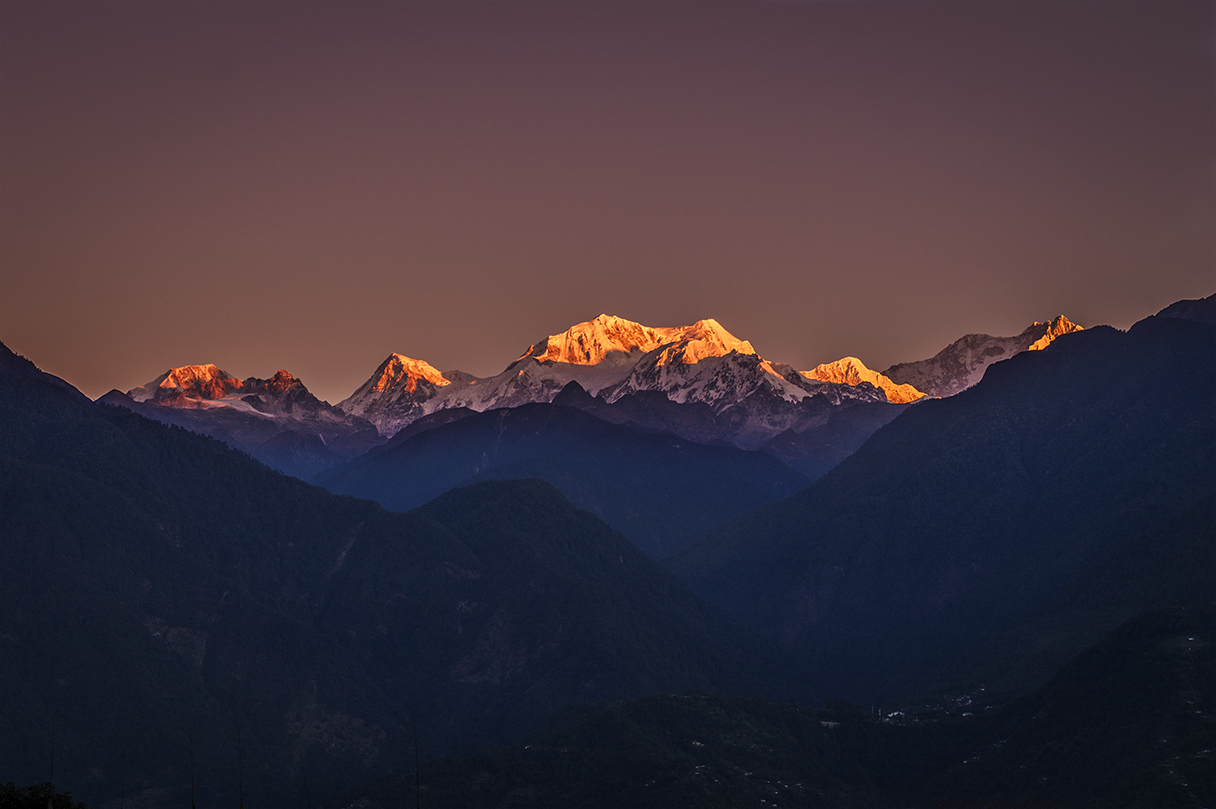
December starts with some of the clearest mornings of the year. The range glows at sunrise around 6:15 am, nights in Pelling fall to 3–5 °C, and Sikkim mandarin oranges arrive in the bazaars. The Bhutia and Lepcha new year festivities of Losoong and Namsoong fall in December in most years. From the 20th, holiday crowds from Kolkata fill Pelling and prices rise sharply until the first days of January.
January is the quietest and often the best value month in the west. Mornings are clear on most days, though haze can soften the view, and dawn in Pelling is close to freezing. Snow occasionally dusts the ridge above Pelling and Sanga Choeling. Maghe Sankranti on 14 or 15 January brings fairs by the rivers of southern and western Sikkim. Higher treks are closed or very cold; stick to village walks.
February warms slightly and brings the Tibetan new year, Losar, usually in February or early March. Just before it, Pemayangtse Monastery holds its Guru Drakmar Chaam on the 28th and 29th days of the 12th Tibetan month. In some years Bumchu at Tashiding also falls in late February. Check lunar dates before you travel.
Spring: March to May
March is when the west turns pink and red. Rhododendrons begin flowering on the ridges around Uttarey and on the trail above Yuksom, and magnolias bloom in the forests below Pelling. Bumchu, the holy water festival at Tashiding, falls on the 14th and 15th days of the 1st Tibetan month, often in March. Mountain views are still good early in the morning, with haze building by late morning.
April is peak flower month and the start of the spring trekking season to Dzongri and Goecha La. Rhododendron forests between Bakhim and Phedang are in full bloom, birdlife is at its most active, and days in Pelling are comfortable at 10–20 °C. Clouds often roll in by mid-morning, so plan sunrise outings and accept that some days the peaks stay hidden.
May is warm and busy with Indian summer-holiday families. It is the best month for birdwatching in the forests around Uttarey, Hee Bermiok and Yuksom, and the trekking season runs until the rains arrive. Expect afternoon showers late in the month. Saga Dawa, the holiest month in the Buddhist calendar, often begins late in May or in June.
We turn this into a priced, day-by-day plan for your dates.
Monsoon: June to September
June brings the south-west monsoon, usually in the second week. Rain is heaviest in the afternoons at first, and the hills turn deep green. Roads begin to see slides, and NH10 between Sevoke and Melli, the main road from the plains, can close for hours or days; the alternative route goes through Kurseong and Darjeeling to Jorethang. Prices drop to their lowest.
July and August are the wettest months. Kanchenjunga Falls and Rimbi waterfall are at full force, leeches appear on forest paths, and views of the range are rare, though the air after a storm can be very clear. Treks into Khangchendzonga National Park are not advisable. Large cardamom, the main cash crop of the west, ripens in the fields from around August. Pang Lhabsol, honouring Kangchenjunga as guardian deity, falls on the 15th day of the 7th Tibetan month, in August or September.
September is a month of change. Early weeks are still wet, but the monsoon usually withdraws in the last week, and the first clear mornings return. It is a good month to visit if your dates are flexible: green hills, low prices, and an improving chance of seeing the mountain. Always build a spare day into a monsoon trip and check current road status before you travel.
Autumn: October and November
October is the start of the best season. The air is washed clean by the monsoon, the hills are still green, and clear sunrises over the range become the rule rather than the exception. The autumn trekking season to Dzongri and Goecha La opens. Dasain (Durga Puja) and Tihar (Diwali), the big festivals of Sikkim's Nepali-speaking majority, fall in October or early November, and the Puja holiday week brings heavy crowds from West Bengal. Book rooms and cars well ahead.
November is, for many, the finest month in the west. Mornings are crisp and very clear, nights in Pelling drop to 6–8 °C, and the Goecha La trail gives its sharpest views, with nights well below freezing at the higher camps. Prices are high but the town is calmer once the Puja and Diwali weeks pass. It is our first choice for honeymoons, photography trips and first-time visitors.
What to pack, season by season
Mountain weather in the west changes within an hour, so layers matter more than one heavy coat. Even in May, a dawn at a Pelling viewpoint can be cold enough for a fleece, and in the monsoon a short walk to Rabdentse can leave you soaked without a proper rain jacket. Most budget and mid-range hotels in Pelling and Yuksom have no central heating, which makes warm sleepwear and socks more useful than you might expect.
Pack for the month, then add one warmer layer than you think you need. If you forget something, Pelling and Gyalshing bazaars sell woollen caps, gloves, socks and cheap rain ponchos at fair prices.
- December to February: down or heavy fleece jacket, thermals, woollen cap, gloves, warm socks, lip balm
- March to May: light fleece, a warm layer for dawn, sun hat, sunscreen, a light rain jacket for afternoon showers
- June to September: good rain jacket or umbrella, quick-dry clothes, shoes with grip, leech socks for forest walks, a small dry bag
- October and November: fleece and a warm jacket for mornings and evenings, sunglasses, layers for trekking
Choosing your month
If seeing Kangchenjunga is the point, come between mid-October and mid-December and stay at least two nights in Pelling. If you love flowers and birds, come in April. If you are watching every rupee, come in January, February or late September. If you want to trek, come in April–May or October–November. If you can only come in the monsoon, keep to Pelling and Yuksom, travel with buffer days and enjoy the waterfalls.
Festival dates follow the Tibetan and Hindu lunar calendars and move each year; road conditions change with the weather. Check current status before you travel, or ask us when you plan.
- Clearest views: mid-October to mid-December
- Flowers and birds: March to May
- Best value: January, February, late September
- Trekking: April to mid-May, October to November
- Avoid if you can: the Puja week and Christmas to New Year for crowds; July and August for rain
Rules, fees, fares and road status change often. Check current status before you travel.


