Kanchenjunga Falls is a tall, double-pronged waterfall beside the Pelling–Yuksom road in Gyalshing district (West Sikkim), about 28 km and 1–1.5 hours from Pelling. It flows all year and is fullest from July to October. A short climb of about 100 steps leads from the car park to the viewing area. Allow 30–45 minutes.
Best months
Jul–Oct for flow; Oct–Nov and Mar–May for travel
Nights we suggest
0 (stop on the Pelling–Yuksom road)
From Gangtok
≈ 140 km · 6–7 h (≈ 28 km beyond Pelling)
Altitude
About 1,400 m (road level)
Known for
Tall two-pronged falls, flowing all year
Permit
Not needed for Indians; foreigners need the Sikkim RAP
Kanchenjunga Falls drops down a steep, forested cliff above the road between Pelling and Yuksom, in several tiers that split into two main streams. Wikipedia's article on Pelling describes it as the 'imposing double-pronged' falls, about 28 km from Pelling and 18 km beyond the Rimbi river, and notes that it runs throughout the year. The Gyalshing district administration lists it as a primary attraction, open from 8 am to 5 pm.
It is a roadside stop, not a hike. From the parking area a flight of about 100 steps, by the district's count, climbs to a viewing platform close enough to feel the spray in the wet months. There are small cafes and stalls by the road, and the district lists parking and a public toilet, which makes it an easy stop for families. It is one of the busiest single stops in West Sikkim in season.
Almost everyone sees it on the Pelling–Yuksom day tour, together with Rimbi waterfall, Khecheopalri Lake and the Norbugang throne at Yuksom. The falls are fullest during and just after the monsoon, from July to October, and thinner but clearer in the dry months. It is worth ten quiet minutes even on a rushed day. If you are staying in Yuksom, 12 km on, you can return early in the morning, before the tour cars arrive, and have the platform almost to yourself.
Highlights
What to see and do
The climb to the viewing area
About 100 steps lead up from the car park to a platform close to the base of the falls. It takes five to ten minutes at an easy pace. In the wet months spray blows across the steps, so wear shoes with grip and hold the railing.
Fullest after the monsoon
From July to October the falls run at full force in two broad white streams, loud enough to drown conversation. September and October are the best balance: strong flow, fewer road problems than mid-monsoon and the first clear skies of autumn.
Part of the Pelling–Yuksom day
The falls sit on the main road to Yuksom, so they slot into a full-day tour with Rimbi waterfall, Khecheopalri Lake and the Norbugang throne and Kathok Lake in Yuksom. Indicatively ₹3,500–5,000 a car from Pelling.
Roadside tea and snacks
Small cafes and stalls by the car park sell tea, coffee, momos, noodles and packaged snacks. Prices are a little above village rates. It is a good mid-morning stop on the way to Yuksom, before the climb to Norbugang.
Quiet early or late
Tour cars arrive in waves from late morning. If you are staying in Yuksom, stop early in the day or in the late afternoon, when the platform is quieter and the light falls more softly on the water.
The story of Kanchenjunga Falls
A waterfall named after the guardian mountain
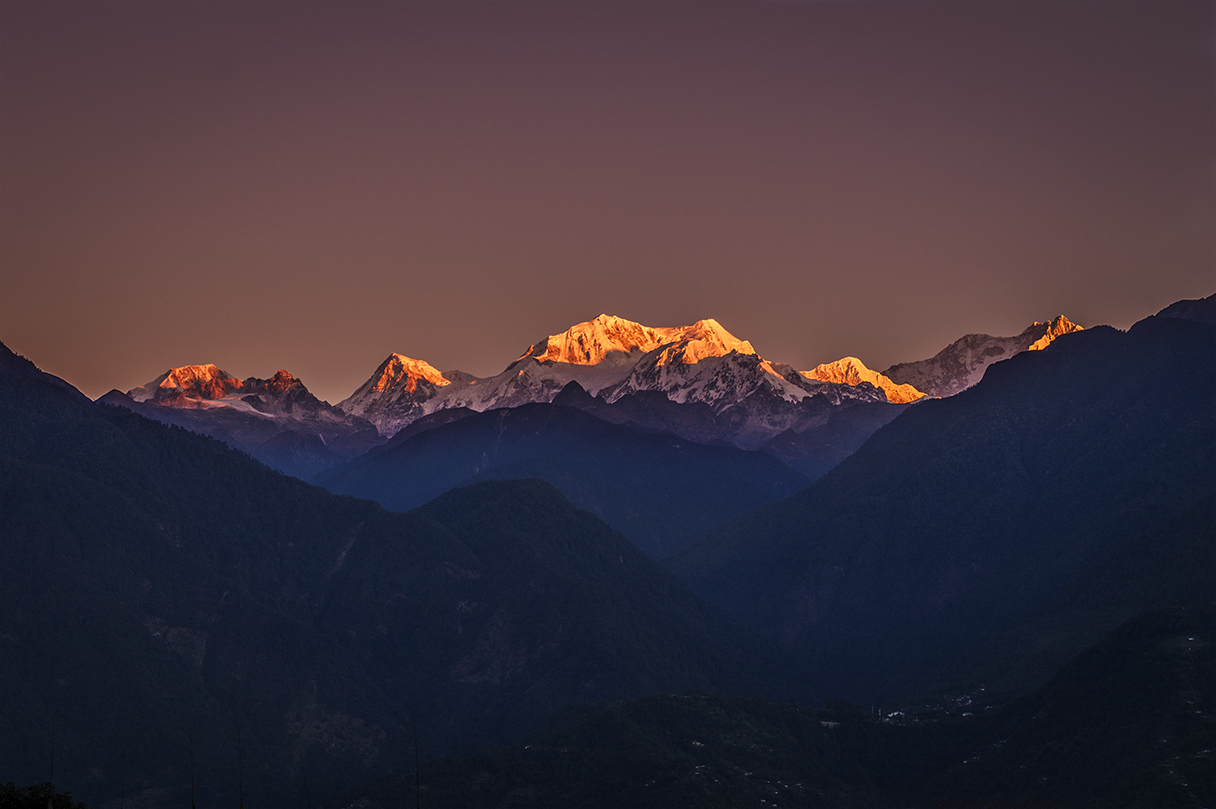
The falls do not come straight off Kangchenjunga, which stands more than 30 km to the north, beyond the ridges of Khangchendzonga National Park. The water comes from streams on the forested slopes above the road. Why, then, the name? In Sikkim, Kangchenjunga is more than a view. It is worshipped as Dzö-nga, the guardian deity of the land, honoured each year at the festival of Pang Lhabsol, and its Tibetan name is usually translated as 'the five treasures of the high snow', as Wikipedia's article on the mountain explains. Naming a waterfall on the road towards Yuksom, the old capital and gateway to the mountain's park, after Kangchenjunga ties a roadside stop to that wider sacred landscape, which the Buddhist tradition calls Demazong. We have not found a written record of when or by whom the name was first used, so we do not offer one. What you can do is stand on the platform, look up at the water and remember that, for many Sikkimese, the mountain it is named after is watching over the valley.
Source: Wikipedia: Kangchenjunga; Pang Lhabsol; Pelling
Little known
Things most visitors never hear
The Gyalshing district administration's 2023 survey lists Kanchenjunga Waterfalls as non-ticketed, open 8 am to 5 pm daily, with parking, cafes and a public toilet.
Source: Gyalshing district administration: Primary Attraction
Wikipedia's Pelling article places the falls about 18 km beyond the Rimbi river and about 28 km from Pelling, and says they run throughout the year.
Source: Wikipedia: Pelling
Phamrong Falls, another tall waterfall listed by the district, lies near Tsong village, about 42 km from Gyalshing, on the Yuksom side of the district.
Source: Gyalshing district administration: Primary Attraction
Shared jeeps between Gyalshing or Pelling and Yuksom pass the falls a few times a day, mostly in the morning, indicatively ₹100–200 a seat. Ask to be dropped, but the next jeep may be hours away, so most budget travellers join a shared day tour from Pelling instead, about ₹500–800 a seat in season.
Private car
From Pelling, about 28 km and 1–1.5 hours via Rimbi. A full-day car covering the falls, Khecheopalri Lake and Yuksom costs indicatively ₹3,500–5,000. From Yuksom, about 12 km and 30–40 minutes. From Gangtok, about 140 km and 6–7 hours via Legship and Pelling.
From Bagdogra / NJP
About 165 km and 6.5–7.5 hours via Melli, Jorethang, Legship and Pelling, indicatively ₹6,500–8,500 by private car. Travellers usually see the falls on the way to Yuksom or on a day tour from Pelling. NH10 closes after heavy rain; the alternative is via Darjeeling. Check current status before you travel.
Permits in West Sikkim
Indian travellers need no permit for Pelling, Yuksom, Khecheopalri, Tashiding or Uttarey. The Dzongri and Goecha La trek needs a Khangchendzonga National Park permit and fees, arranged at Yuksom through a registered trekking agency with a licensed guide. Foreign nationals need the Restricted Area Permit to enter Sikkim, applied for online via the e-FRRO portal after arriving in India, and a Protected Area Permit in a group of two or more for the Dzongri–Goecha La trek. Sikkim charges a ₹50 per tourist fee at check-in. Check current status before you travel.
There is nowhere to stay at the falls. Most travellers stay in Pelling, about 28 km away: Hotel Garuda and Summit Newa Regency are budget and value bases, Norbu Ghang Retreat and Spa suits a comfort trip and The Elgin Mount Pandim is the premium choice. If you are heading to Yuksom, 12 km on, Yuksum Residency and Hotel Tashigang are practical value hotels, and village homestays in Yuksom cost less and include meals.
Kanchenjunga Falls is beside the main road between Pelling and Yuksom in Gyalshing district (West Sikkim), about 28 km and 1–1.5 hours from Pelling and about 12 km before Yuksom. It is a short climb of about 100 steps from the roadside car park to the viewing area.
Is Kanchenjunga Falls worth visiting?
Yes, as a stop on the Pelling–Yuksom road. It is one of the tallest and most powerful roadside waterfalls in West Sikkim, especially from July to October, and takes only 30–45 minutes. It is not worth a special trip on its own; combine it with Khecheopalri Lake and Yuksom.
How far is Kanchenjunga Falls from Pelling?
About 28 km by road, roughly 1–1.5 hours via Rimbi. A private car day tour covering the falls, Khecheopalri Lake and Yuksom costs indicatively ₹3,500–5,000 from Pelling, and shared tour seats about ₹500–800 in season. Check current status before you travel.
Does Kanchenjunga Falls flow all year?
Yes. Wikipedia's Pelling article describes it as active throughout the year. Flow is strongest from July to October, during and after the monsoon, and lower from December to April, when the falls are thinner but still attractive and the roads are more reliable.
Is the water from Kangchenjunga?
No. Despite the name, the falls are fed by streams on the forested slopes above the road, not by the mountain's glaciers. Kangchenjunga stands more than 30 km to the north. The name honours the mountain, which is worshipped in Sikkim as the guardian deity Dzö-nga.
Are there toilets and food at Kanchenjunga Falls?
The district administration lists parking, cafes and a public toilet. Small stalls sell tea, coffee, momos, noodles and snacks, at prices a little above village rates. Facilities are basic and may close early in the off-season, so carry water and a snack.
Can children and older people visit Kanchenjunga Falls?
Yes. The climb is about 100 steps with railings, manageable for most children and older travellers with rests. Hold children's hands on the wet steps and keep them off the rocks at the base. Those who cannot climb can still see the lower part of the falls from the road.
Can I swim or bathe at Kanchenjunga Falls?
No. The pool and rocks at the base are slippery, the water is cold and fast, and climbing beyond the platform is dangerous, especially in the monsoon. Enjoy the falls from the viewing area. If you want a quiet spot by water, Kathok Lake in Yuksom is a short drive on.
How do I reach Kanchenjunga Falls without a private car?
Join a shared day tour from Pelling in season, about ₹500–800 a seat, or take a shared jeep on the Pelling–Yuksom route and ask to be dropped at the falls. Return jeeps are infrequent and full by afternoon, so a shared tour is easier for most travellers.
Every cost shownRooms, car, permits and our fee, itemised
One person to callFrom Bagdogra or NJP until you are back
No payment to startA deposit only when you book
Get my price
Want Kanchenjunga Falls in your plan?
Tell us your dates, who is travelling and roughly what you want to spend. We reply within one working day with a day-by-day route and an itemised price.
No payment to start
Permits handled through registered partners
Every hotel, car and fee listed
Price my Sikkim trip
Tell us dates, people and budget. You get a day-by-day plan and an itemised price within one working day.