Pemayangtse is the senior monastery of the Nyingma order in Sikkim, at about 2,085 m on a ridge 2 km below Upper Pelling. Enlarged under the third Chogyal and consecrated in 1710, it keeps the seven-tiered wooden Zangdok Palri model and holds mask dances in February. Allow 1–1.5 hours.
Pemayangtse stands on a ridge between Pelling and Gyalshing, looking north to Kangchenjunga across the Rangeet valley. It is the head monastery of the Nyingma order in Sikkim, the oldest school of Tibetan Buddhism, and by tradition it accepts only ta-tshang, 'monks of pure lineage', who are celibate and without physical deformity. Its lamas have historically played a part in the rituals of the Namgyal royal family.
The date of the monastery is told in layers. Wikipedia records that Lhatsun Chempo, one of the three lamas who consecrated the first Chogyal in 1642, founded a small temple here in the 1640s; that it was enlarged under the third Chogyal, Chakdor Namgyal; and that it was consecrated in 1710. Many guidebooks give 1705 as the founding date of the present monastery. The buildings have been repaired and rebuilt several times over the centuries.
Inside, the ground floor holds the main prayer hall with statues of Guru Padmasambhava and his manifestations. The top floor holds the monastery's best-known treasure: a seven-tiered painted wooden model of Zangdok Palri, the celestial palace of Guru Padmasambhava, made by the late Dungzin Rinpoche over five years. On the last two days of the Tibetan year, in February, the monks perform mask dances in the courtyard.
Highlights
What to see and do
The Zangdok Palri model
On the top floor, a seven-tiered painted wooden model of Guru Padmasambhava's celestial palace, made by the late Dungzin Rinpoche over five years. Take your time: each tier shows a different realm, and a monk may explain the figures if asked politely.
Morning prayers
Arrive soon after opening to hear the monks' morning chanting, with long horns and drums, before the day visitors arrive from Gangtok and Darjeeling. Sit quietly at the back, and never photograph during prayers without permission.
February mask dances
On the 28th and 29th days of the 12th Tibetan month, monks in brocade and painted masks dance in the courtyard to clear the old year's obstacles before Losar. Arrive by mid-morning for a place on the steps.
Kangchenjunga from the ridge
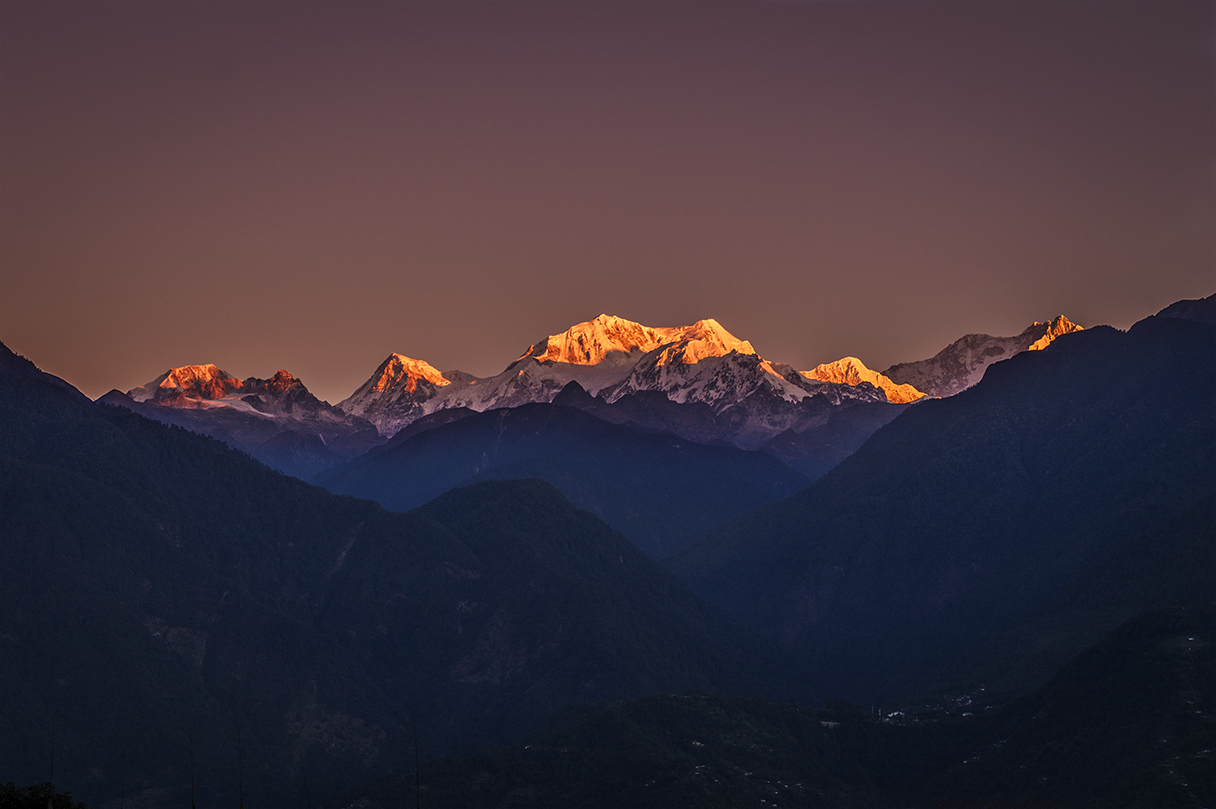
The monastery's courtyard and the lawns nearby face Kangchenjunga, Kabru and Pandim. On clear mornings between October and March the view framed by prayer flags and the monastery roof is one of Pelling's classic photographs.
Walk on to Rabdentse
From Pemayangtse it is a short walk to the gate on the Pelling–Gyalshing road and the 15–20 minute forest path to the Rabdentse ruins, the royal capital from 1670. The two together make a 3-hour heritage morning.
The story of Pemayangtse Monastery
Zangdok Palri, a heaven carved by one lama
Zangdok Palri, the 'Copper-Coloured Mountain', is the pure land where Guru Padmasambhava, the 8th-century teacher who brought Buddhism to the Himalaya, is believed to live in a palace on a mountain rising from an ocean. Nyingma practitioners visualise it in meditation, and its image appears in murals across Sikkim and Bhutan. At Pemayangtse it takes three-dimensional form. On the top floor stands a seven-tiered painted wooden model of the palace, crowded with deities, saints, rainbows, animals and guardian figures, rising level by level to the central figure. Accounts from the monastery, repeated by Lonely Planet and other guides, say it was made single-handed by the late Dungzin Rinpoche over five years. Visitors often walk past it in a minute. Stay longer: each tier shows a different realm, and the monks can point out Padmasambhava's eight manifestations. Photography inside is usually not allowed, which is one more reason to look slowly.
Pemayangtse accepts only ta-tshang, 'monks of pure lineage', who must be celibate and without physical abnormality, a rule Wikipedia says still applies.
Source: Wikipedia: Pemayangtse Monastery
The monastery's annual mask dances fall on the 28th and 29th days of the 12th Tibetan month, in February, closing the old year before Losar.
Source: Wikipedia: Pemayangtse Monastery
As the head of the Nyingma order in Sikkim, Pemayangtse is described by Wikipedia as controlling the other monasteries of that order in the state.
From Upper Pelling it is about 2 km downhill on the road towards Gyalshing, 25–30 minutes on foot. The walk back up is steeper, so many people take a taxi one way.
Private car
Every Pelling half-day sightseeing tour includes Pemayangtse, along with Rabdentse, the Skywalk and Sanga Choeling, indicatively ₹2,500–3,500 per car. A one-way taxi from Upper Pelling costs about ₹200–400.
From Bagdogra / NJP
Reach Pelling first: about 135–145 km and 5–6 hours via Melli, Jorethang, Legship and Gyalshing. The monastery is on the road just before Pelling, so you can stop on arrival if you reach before closing.
Permits in West Sikkim
Indian travellers need no permit for Pelling, Yuksom, Khecheopalri, Tashiding or Uttarey. The Dzongri and Goecha La trek needs a Khangchendzonga National Park permit and fees, arranged at Yuksom through a registered trekking agency with a licensed guide. Foreign nationals need the Restricted Area Permit to enter Sikkim, applied for online via the e-FRRO portal after arriving in India, and a Protected Area Permit in a group of two or more for the Dzongri–Goecha La trek. Sikkim charges a ₹50 per tourist fee at check-in. Check current status before you travel.
The Elgin Mount Pandim is a five-minute walk from the monastery gate and the closest premium stay, quiet and set in gardens. Summit Newa Regency is a three-minute drive away and a good comfort choice. Upper Pelling, 2 km up the road, has the widest range of budget and mid-range hotels, including Hotel Garuda, and the comfort-tier Norbu Ghang Retreat and Spa.
Wikipedia records that Lhatsun Chempo founded a small temple here in the 1640s, that it was enlarged under the third Chogyal, Chakdor Namgyal, and that it was consecrated in 1710. Many guidebooks give 1705 for the present monastery. It is among the oldest and most important monasteries in Sikkim.
What is the Pemayangtse Monastery entry fee?
Indicatively ₹20–50 per person, collected at the gate, with different rates for foreigners at times. Timings are roughly morning to late afternoon. Fees and hours change, so check current status before you travel. Photography inside the halls is usually not allowed.
How far is Pemayangtse from Pelling?
About 2 km below Upper Pelling on the road to Gyalshing: 25–30 minutes on foot downhill, or 5–10 minutes by car. The Rabdentse ruins are a short walk from the monastery via a forest path. Most Pelling half-day tours include both.
What sect does Pemayangtse belong to?
Pemayangtse belongs to the Nyingma order, the oldest school of Tibetan Buddhism, which traces its teachings to Guru Padmasambhava. It is the head Nyingma monastery in Sikkim and by tradition accepts only ta-tshang, monks of pure lineage.
What is special about Pemayangtse?
Its standing as the head Nyingma monastery of Sikkim, its link to the founding lamas of the kingdom, its seven-tiered wooden Zangdok Palri model, and its February mask dances. The view of Kangchenjunga from the courtyard on clear mornings is a bonus.
When are the Pemayangtse mask dances?
On the 28th and 29th days of the 12th Tibetan month, just before Losar, normally in February. Dates change every year with the lunar calendar. Arrive by mid-morning to find space in the courtyard. Check current status before you travel.
Can I visit Pemayangtse and Rabdentse together?
Yes, and we recommend it. Visit Pemayangtse first, then walk to the gate on the Pelling–Gyalshing road and follow the 15–20 minute forest path to Rabdentse. The two sites tell the story of the kingdom's second capital. Allow about 3 hours in all.
Is Pemayangtse suitable for elderly visitors?
Mostly. Cars can drive close to the entrance, and the main hall is on the ground floor. Reaching the Zangdok Palri model needs a climb of steep wooden stairs. At about 2,085 m, walk slowly and rest. The Rabdentse path is gentle but uneven.
Where should I stay near Pemayangtse?
The Elgin Mount Pandim is a five-minute walk from the monastery, and Summit Newa Regency is a three-minute drive. Upper Pelling, 2 km away, has budget and comfort hotels such as Hotel Garuda and Norbu Ghang. Staying close lets you visit at opening time.
Every cost shownRooms, car, permits and our fee, itemised
One person to callFrom Bagdogra or NJP until you are back
No payment to startA deposit only when you book
Get my price
Want Pemayangtse Monastery in your plan?
Tell us your dates, who is travelling and roughly what you want to spend. We reply within one working day with a day-by-day route and an itemised price.
No payment to start
Permits handled through registered partners
Every hotel, car and fee listed
Price my Sikkim trip
Tell us dates, people and budget. You get a day-by-day plan and an itemised price within one working day.