Why stay in a village
Pelling has the views and the hotels, but the life of West Sikkim happens in its villages: cardamom terraces, maize and millet fields, monasteries on the ridges and families who have farmed the same slopes for generations. A homestay puts you at their table. You eat what the household eats, hear how the season is going and wake to roosters rather than tourist cars.
Sikkim encourages rural homestays, and Sikkim Tourism runs a registration scheme for them. In our experience the best are simple, clean and warm: a private room, often an attached bathroom, hot water by geyser or bucket, and two home-cooked meals. Do not expect hotel service or menus. Expect hospitality, early dinners and good conversation.
Homestays also spread the money a trip brings. A night in a Pelling hotel supports the hotel; a night in Darap, Dentam or Uttarey pays a farming family directly and often a neighbour who cooks, guides or drives. For many villages in the west, a steady trickle of guests in the shoulder months now matters as much as the cardamom price.
The villages we send people to
These are the West Sikkim villages where we place guests most often. Altitudes and distances are approximate, and rates are indicative per person a night with dinner and breakfast, twin sharing, for 2026. Check current status before you travel.
| Village | Altitude | From Pelling | Rate pp with meals | Best for |
|---|---|---|---|---|
| Darap | ≈ 1,600 m | ≈ 7 km · 20–30 min | ≈ ₹1,200–2,000 | Limbu village life, close to Pelling sights |
| Khecheopalri village | ≈ 1,800 m | ≈ 30 km · 1–1.5 h | ≈ ₹1,200–2,000 | Sacred lake, quiet forest, Bhutia households |
| Yuksom | ≈ 1,780 m | ≈ 35 km · 1.5–2 h | ≈ ₹1,300–2,500 | History walks, trek starts |
| Hee Bermiok | ≈ 1,900–2,000 m | ≈ 30 km · 1.5 h | ≈ ₹1,300–2,200 | Ridge walks, mountain views, birding |
| Dentam | ≈ 1,400 m | ≈ 25 km · 1–1.5 h | ≈ ₹1,200–2,000 | Farm valley, dairy, Singshore Bridge |
| Uttarey | ≈ 2,000 m | ≈ 35 km · 2 h | ≈ ₹1,200–2,000 | Forest, rhododendrons, border village |
Darap and Khecheopalri, close to Pelling
Darap sits in a valley about 7 km below Pelling, on the road towards Rimbi and Yuksom. It is known as a Limbu village, and several families open their homes to guests. Walks lead through terraced fields and small forests to the Rimbi river. Because it is so close to Pelling, you can stay in Darap and still drive up for sunrise over the range or walk to Pemayangtse and Rabdentse in a day.
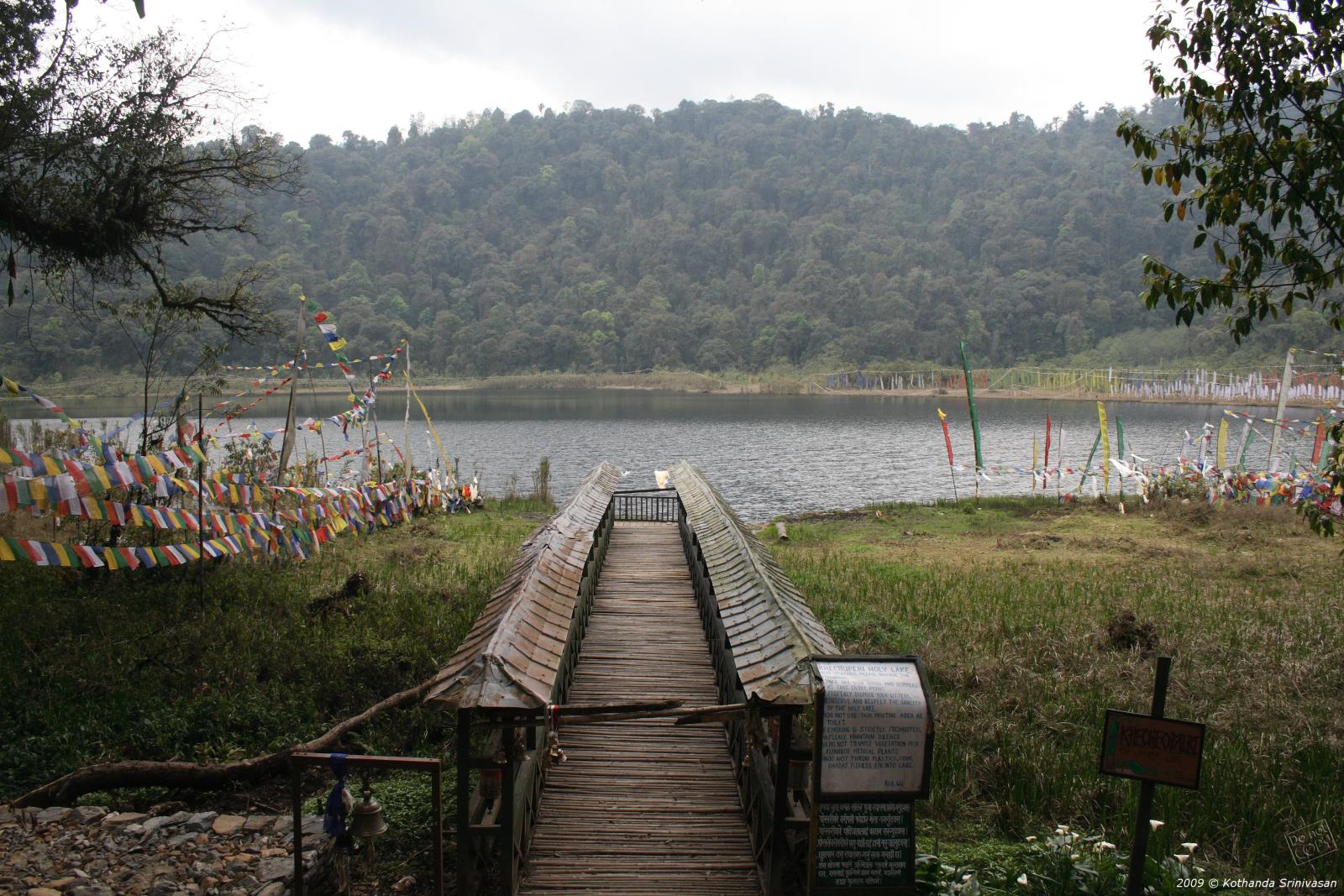
Khecheopalri village lies on the hill above the sacred lake, about 30 km from Pelling. Wikipedia records that the lake is sacred to both Buddhists and Hindus and is known locally as Sho Dzo Sho, Oh Lady, Sit Here. Homestays here, mostly in Bhutia households, let you visit the lake at dawn before day visitors arrive and walk up to the small monastery on the ridge. Nights are very quiet; bring a torch.
We turn this into a priced, day-by-day plan for your dates.
Yuksom, Hee Bermiok and Dentam
Yuksom has a mix of lodges and family homestays, many run by Bhutia families with relatives who work as trekking guides and cooks. It is the best homestay base for history: Norbugang, Kathok Lake and Dubdi Monastery are on foot, and Tashiding is an hour away. Homestays fill early in October and April with trekkers, so book ahead.
Hee Bermiok sits on a ridge west of Pelling, with forest walks and views of the Kangchenjunga range across the valleys. It is a good stop for birders and walkers, and on the way to Dentam and Uttarey. Dentam, lower in a broad farming valley at about 1,400 m, is known for dairy and fields of maize, vegetables and cardamom; from here the road climbs to Singshore Bridge, a long suspension bridge high above a gorge, and on to Uttarey.
Both are good places to see the farming year up close. From August to October, large cardamom is harvested from shaded plots under alder trees; in November and December, households dry maize on their balconies and pick Sikkim mandarins. Ask your host if you can walk with them to the fields: most are glad to show you, and you will learn more in an hour than from any signboard.
Uttarey, the far west
Uttarey is the last village before the Nepal border, at about 2,000 m. The Gyalshing district administration places the Chewabhanjyang pass about 10 km beyond, on the Singalila ridge. Families here are Limbu, Bhutia and Nepali-speaking, and homestays are the main way to stay. Days are for forest walks, a visit to the village monastery, short hikes towards the ridge in spring and evenings by the kitchen stove.
It is a long way from the plains, 6.5–7.5 hours from NJP, so give it at least two nights. Mobile networks can be patchy, and power cuts happen in storms: bring a power bank.
In April the forests around Uttarey turn red and pink with rhododendron, and the village is busiest with walkers. In December and January it is cold, clear and very quiet, with frost on the fields in the morning.
Three village routes that work
Homestays are most rewarding when you string two or three villages together and walk or drive short distances between them. These are routes we plan often. Each starts and ends at NJP or Bagdogra, and each keeps drives under three hours except on arrival and departure days.
A car and driver for the whole trip is the simplest way to link villages, about ₹3,500–4,500 a day for a small car. On a tighter budget, shared jeeps link Gyalshing with Yuksom, Dentam and Uttarey, mostly leaving in the morning; your host can tell you where and when to wait.
- 4 nights near Pelling: Darap 2 nights (Pelling sights by day), Khecheopalri village 2 nights (lake at dawn, ridge walks).
- 5 nights of history: Darap 2 nights, Yuksom 3 nights (Dubdi, Norbugang, Kathok Lake, Tashiding).
- 6 nights in the far west: Hee Bermiok 2 nights, Dentam 1 night, Uttarey 3 nights (forest walks, rhododendrons in spring).
What you eat
Homestay food in the west is rice-based and seasonal. A typical dinner is rice, dal, a vegetable curry, a green such as fern shoots or squash leaves, gundruk (fermented leafy greens) soup and chilli pickle, with chicken or pork on request. Breakfast might be puri or roti with potato curry, sel roti (a ring-shaped rice bread), eggs or porridge. In Limbu households you may be offered kinema, fermented soybeans cooked with tomato and chilli; in Bhutia homes, thukpa or momos.
Many households also make chhyang or tongba, millet beer sipped through a bamboo straw. It is offered, not expected: say no politely if you do not drink. Tell your host about food restrictions when you book, not at the table.
Homestay etiquette and booking
A few small courtesies make a big difference to how your hosts see visitors. Book through a registered agent or directly with registered homestays, and confirm the rate, meals included and whether a room heater or hot water costs extra. Payment is usually cash or UPI at the end of the stay; carry some cash, as signal for UPI can fail in remote villages.
- Take shoes off at the door and ask before entering the kitchen or the family altar room.
- Dress modestly, especially near monasteries and in older households.
- Ask before photographing people, children or interiors; never treat people as scenery.
- Keep to meal times; dinner is often at 7–7:30 pm and the house quiets early.
- Use water and electricity lightly; many villages run on limited supply.
- Carry your rubbish back to town; village waste systems are small.
- Tip helpers in the kitchen or the guide who walks with you, rather than handing money to the host in front of others.
Rules, fees, fares and road status change often. Check current status before you travel.