Hee Bermiok is a cluster of farming villages in Gyalshing district (West Sikkim), climbing to about 1,950 m in the hills between Pelling and Dentam. It is known for cardamom and orange farms, homestays, forest walks and its Limbu heritage at nearby Martam, linked to the scholar Sirijunga. Stay 1–2 nights.
Best months
Oct–Dec and Mar–May
Nights we suggest
1–2
From Gangtok
≈ 130 km · 6–7 h via Legship or Pelling
Altitude
About 1,950 m (upper villages)
Known for
Limbu heritage, cardamom and orange farms, homestays, walks
Permit
Not needed for Indians; foreigners need the Sikkim RAP
Hee Bermiok is not one village but a spread of hamlets, fields and forest on a long slope west of Pelling, with Bermiok Bazar as its market. The upper villages sit at around 1,950 m and the lower fields drop well below that towards the river. Wikipedia describes it as a small town known for nature walks, hiking, mountain biking and the customs of the Limbu, Sherpa, Bhutia, Lepcha and Nepali communities who live here.
It is a farming place first. Black cardamom grows under shade trees on the slopes, and orange orchards fill the lower fields; in late autumn and winter the fruit ripens and the cardamom is dried in smoke houses. Families have opened homestays, and a few small hotels and a resort have come up, but it remains quiet, with the Kangchenjunga range visible from the upper villages on clear mornings. Evenings are early and quiet.
Hee Bermiok matters to the Limbu (Yakthung) community. Martam, near Bermiok Bazar, is linked with Te-ongsi Sirijunga, the 18th-century scholar who revived the Limbu script, and it has a Limbu community temple. The community gathers there each December around his birth anniversary. We send travellers here for two nights of village life, slow walks and good home food, often paired with Dentam, the Singshore Bridge and Uttarey further west, as a short circuit of West Sikkim's farming villages.
Highlights
What to see and do
Martam and the Limbu temple
Martam, near Bermiok Bazar, has the Limbu community temple that Wikipedia says was the first of its kind, inaugurated in 1996, and is linked with the scholar Sirijunga. Visit with your host or a local guide, ask before entering and dress modestly.
Cardamom and orange farms
Black cardamom grows under shade trees on the slopes, and orange orchards fill the lower fields. Cardamom is harvested from about August to October and dried in smoke houses; oranges ripen from November into January. Ask your host to show you round.
Dawn view of Kangchenjunga
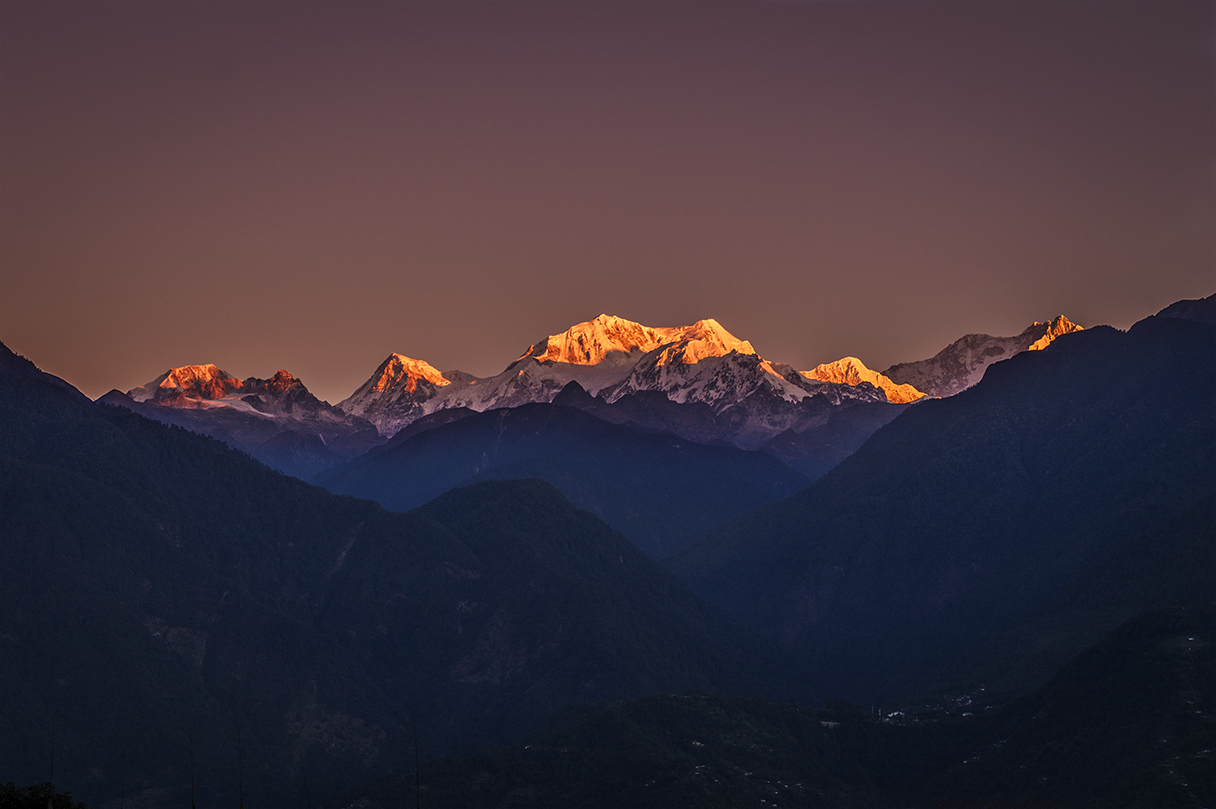
From the upper villages, on clear mornings from October to March, the Kangchenjunga range shows across the forested ridges to the north. Step outside at first light with a cup of tea; cloud usually builds by mid-morning.
Forest and ridge walks
Paths climb from the villages through oak and rhododendron forest to the ridges above. A village guide can lead an easy 3–4 hour walk with views and good birding, best in the early morning in spring and autumn.
Homestay food
Meals are home-style and generous: rice, dal, seasonal greens, gundruk or kinema, pickles and often chicken or pork, with oranges in winter. Limbu kitchens are known for fermented foods; ask your host to explain what is on the plate.
The story of Hee Bermiok
Sirijunga and the Limbu script
Te-ongsi Sirijunga was an 18th-century Limbu scholar who travelled through Limbuwan in eastern Nepal and into Sikkim teaching the Limbu script, language and the Mundhum, the Limbu body of oral scripture. Wikipedia's biography, which draws largely on Limbu tradition and is thinly referenced, says he was born in 1704 in today's Taplejung district of Nepal, entered Sikkim in 1734 and set up centres of learning, and was killed around 1741 at Kalej Khola in Hee-Martam, at a time of conflict between Limbu communities and the Sikkimese court and monasteries. The Wikipedia article on Hee Bermiok adds that the first Limbu community temple was built at Martam and inaugurated in 1996, and that every December, around his birth anniversary, the Limbu community gathers at the temple courtyard with prayers, priests' dances and Limbu and Nepali dances. Accounts of his life and death differ, so we tell it as the community remembers it. Ask your homestay hosts what Sirijunga means to them today; for many Limbu families in West Sikkim, the script he revived is a living part of their identity.
Wikipedia gives Sirijunga's death place as Kalej Khola in Hee-Martam, West Sikkim, around 1741–1742, and notes that the Nepal Philatelic Bureau has issued a postage stamp in his name.
Source: Wikipedia: Te-ongsi Sirijunga Xin Thebe
The first Limbu community temple, according to Wikipedia's Hee Bermiok article, was built at Martam near Bermiok Bazar and inaugurated in 1996 by the then Chief Minister, Pawan Kumar Chamling.
Source: Wikipedia: Hee Burmiok
Wikipedia lists Hee Bermiok in its category of mountain biking venues, alongside its better-known farming of black cardamom and oranges on the slopes.
Local jeeps link Bermiok Bazar with Gyalshing and Jorethang, mostly in the morning, indicatively ₹100–250 a seat depending on the route. Your homestay can tell you current timings. A shared jeep from Siliguri to Jorethang, then a local jeep or small car, is the budget route.
Private car
From Pelling, roughly 1–1.5 hours, indicatively ₹2,000–3,000 one way. From Jorethang, about 2–2.5 hours through the hills. From Gangtok, about 130 km and 6–7 hours via Legship. Roads are narrow and winding; avoid driving after dark.
From Bagdogra / NJP
About 145–155 km and 6–7 hours via Melli and Jorethang, indicatively ₹6,000–8,000 by private car. NH10 closes after heavy rain; the alternative is via Darjeeling, adding 1–2 hours. Check current status before you travel.
Permits in West Sikkim
Indian travellers need no permit for Pelling, Yuksom, Khecheopalri, Tashiding or Uttarey. The Dzongri and Goecha La trek needs a Khangchendzonga National Park permit and fees, arranged at Yuksom through a registered trekking agency with a licensed guide. Foreign nationals need the Restricted Area Permit to enter Sikkim, applied for online via the e-FRRO portal after arriving in India, and a Protected Area Permit in a group of two or more for the Dzongri–Goecha La trek. Sikkim charges a ₹50 per tourist fee at check-in. Check current status before you travel.
Hee Bermiok has a number of family homestays spread across the villages, at indicatively ₹1,200–2,200 per person with meals, plus a few small hotels and a resort, which Wikipedia's article on the village mentions. Standards vary a great deal from one homestay to the next, so tell us what matters to you, such as an attached bathroom or a view, and we will match a family. For premium rooms, stay in Pelling at The Elgin Mount Pandim or Norbu Ghang Retreat and Spa and visit Hee Bermiok by day.
Packages
Trips that stop in Hee Bermiok
Indicative prices per person, twin sharing. Every package shows how its price breaks down.
Hee Bermiok is a group of villages around Bermiok Bazar in Gyalshing district (West Sikkim), in the hills between Pelling and Dentam. The upper villages sit at about 1,950 m. It is roughly 1–1.5 hours by car from Pelling, about 2–2.5 hours from Jorethang and about 6–7 hours from Gangtok.
What is Hee Bermiok known for?
Farm life and Limbu heritage. The slopes grow black cardamom and oranges, families run homestays, and paths lead into oak and rhododendron forest. Nearby Martam is linked with the Limbu scholar Sirijunga and has a Limbu community temple. Wikipedia also notes the area for mountain biking.
How many days should I spend in Hee Bermiok?
Two nights is ideal: one full day for a forest walk in the morning and a farm or heritage visit in the afternoon. One night works as a stop between Pelling and Uttarey. For a longer village circuit, add Dentam, the Singshore Bridge and two or three nights in Uttarey.
Is Hee Bermiok good for families?
Yes, for families who enjoy simple village life. Children usually like the farms, orchards and animals, and the walks can be kept short. Homestays are basic and evenings quiet, with no shops or entertainment. Families who want hotel comforts should base in Pelling and visit by day.
Where can I stay in Hee Bermiok?
Mostly in family homestays across the villages, at indicatively ₹1,200–2,200 per person with meals, and there are a few small hotels and a resort. Standards vary, so ask us to match a homestay to your needs. Premium travellers usually stay in Pelling and visit by day.
When is the best time to visit Hee Bermiok?
October to December for clear views, harvests and oranges, and March to May for flowers and birds. December and January bring cold nights but clear mornings and ripe oranges. June to September is wet, with leeches and landslides, though cardamom harvest begins in August.
How do I get to Hee Bermiok from Siliguri?
Take a shared jeep from Siliguri to Jorethang, about 3–3.5 hours via Melli on NH10, then a local jeep or small car up to Hee Bermiok, about 2–2.5 hours more. A private car from NJP or Bagdogra takes about 6–7 hours. If NH10 is closed, the route goes via Darjeeling.
Do I need a permit for Hee Bermiok?
Indian citizens do not need a permit. Foreign nationals need Sikkim's Restricted Area Permit, applied for online through the e-FRRO portal after arriving in India. All tourists pay Sikkim's ₹50 entry fee, usually collected at check-in by hotels and homestays. Check current status before you travel.
What is the Limbu script?
The Limbu script, also called Sirijunga, is the writing system of the Limbu language, spoken in eastern Nepal and Sikkim. It was revived in the 18th century by Te-ongsi Sirijunga, who is linked with Martam near Hee Bermiok. In Sikkim, Limbu is one of the state's recognised languages, and you may see the script on signs and in schools.
Every cost shownRooms, car, permits and our fee, itemised
One person to callFrom Bagdogra or NJP until you are back
No payment to startA deposit only when you book
Get my price
Want Hee Bermiok in your plan?
Tell us your dates, who is travelling and roughly what you want to spend. We reply within one working day with a day-by-day route and an itemised price.
No payment to start
Permits handled through registered partners
Every hotel, car and fee listed
Price my Sikkim trip
Tell us dates, people and budget. You get a day-by-day plan and an itemised price within one working day.