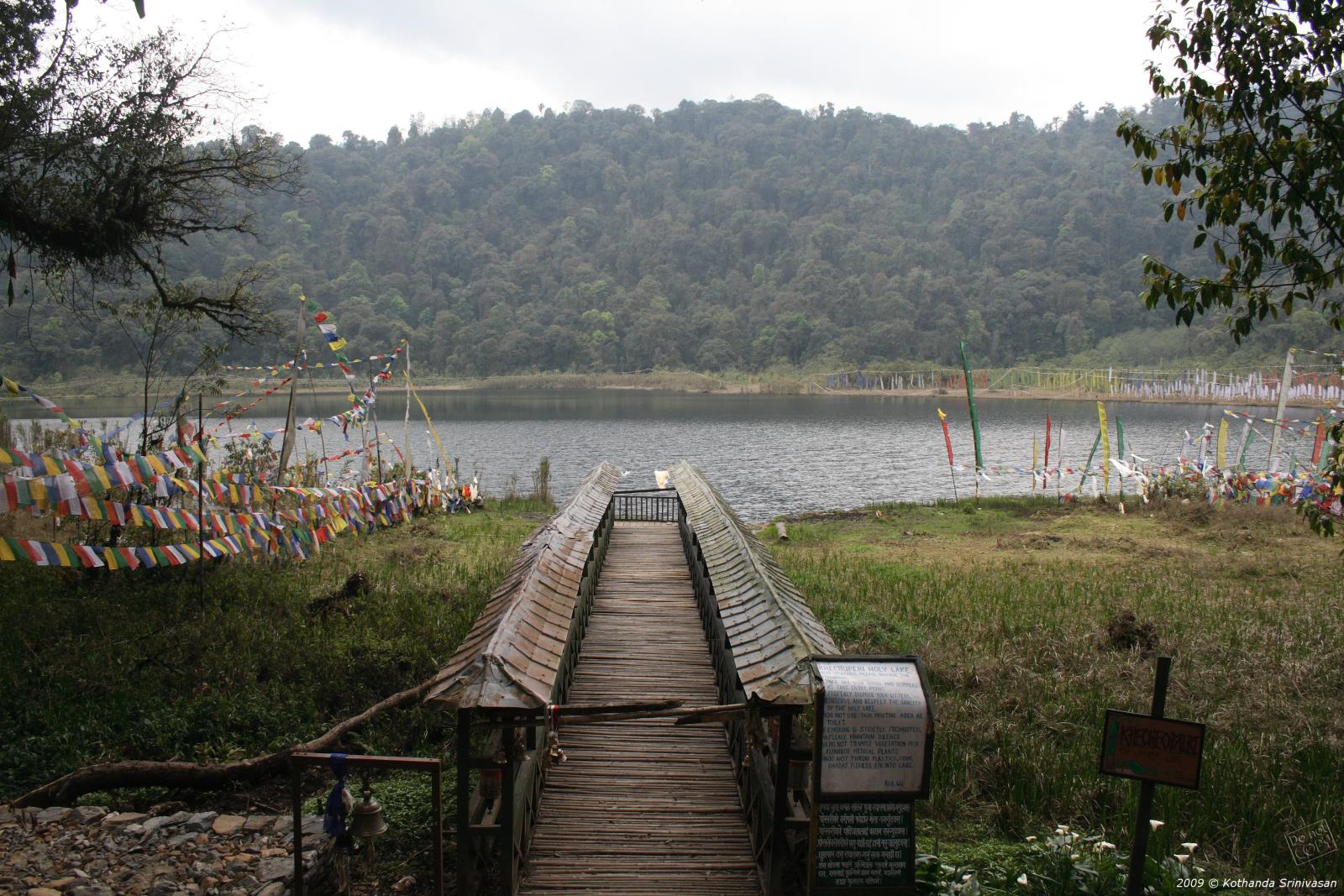
Darap is a farming village at about 1,800 m, 8 km from Pelling on the road to Rimbi and Yuksom, home mainly to Limbu families. It has community homestays, including the award-winning Daragaon Village Retreat, and is the easiest place near Pelling to stay with a family, walk through fields and eat home cooking.
Best months
Oct–May
Nights we suggest
1–2
From Gangtok
≈ 125 km · 5.5–6.5 h (8 km beyond Pelling)
Altitude
1,800 m
Known for
Limbu village life, homestays, farm walks, Rimbi river
Permit
Not needed
About Darap
What to know before you go
Darap spreads across a slope below Pelling, with houses among terraces of maize, millet, vegetables and cardamom, and forest above. It covers about 565 hectares and had 1,743 residents at the 2011 census. Most families are Limbu (Yakthung), one of the oldest communities of the eastern Himalaya, with their own language, script and Mundhum oral tradition.
The village took up tourism carefully, through homestays rather than hotels, and has its own tourism committee. Daragaon Village Retreat, its best-known homestay, received silver in Outlook Traveller's Responsible Tourism Awards in 2017 in the community-based homestay category. Other families host guests in simpler rooms.
From Darap, short walks lead down to the Rimbi river and waterfall and up to viewpoints facing Kangchenjunga. Pelling's monasteries are 25–30 minutes away by car, and Khecheopalri Lake and Yuksom are on the same road. A night or two here gives you Pelling's sights with a village's quiet.
Highlights
What to see and do
Homestay with a Limbu family
Stay in a family home, eat what the household eats, and talk about farming, school and festivals over tea by the stove. Daragaon Village Retreat is the best-known option; we also know simpler family homes in the village.
Farm and field walks
Walk the terraces with your hosts: maize and millet in summer and autumn, vegetables and cardamom year-round. In season you can help with harvesting or planting, if the family is happy to show you.
Rimbi river and waterfall
A short drive or walk below the village, the Rimbi river runs past a roadside waterfall and the Sewaro Rock Garden. In spring and autumn it is a pleasant place for a picnic; in the monsoon the water roars.
Limbu kitchen
Limbu home cooking uses fermented foods such as kinema (soybean) and gundruk (greens), millet, and seasonal vegetables. Ask your host to cook a Limbu dish and explain it; many families are proud to share their food.
Close to Pelling and Yuksom
Darap is 25–30 minutes from Pelling's monasteries and on the road to Khecheopalri Lake, the Kanchenjunga Falls and Yuksom, so it works as a quiet base for the whole Pelling–Yuksom circuit.
The story of Darap
The Limbu of Darap and the Mundhum
The Limbu, who call themselves Yakthung, are one of the indigenous peoples of the eastern Himalaya, living across eastern Nepal and West Sikkim, where Gyalshing district has a large Limbu population. Their traditional religion is guided by the Mundhum, a body of oral scripture recited by priests called phedangma and other ritual specialists, covering creation, ancestry and the rites of birth, marriage and death. The Limbu have their own script, revived in the 18th century by the scholar Te-ongsi Sirijunga, who was killed in West Sikkim around 1741. In villages such as Darap, Limbu identity shows in language, food, dress on festival days and dances such as the chyabrung, performed with a large two-sided drum. Wikipedia's articles on the Limbu people and the Limbu script are a good starting point; better still is to ask your homestay family which traditions they keep. Do not expect performances on demand: ceremonies happen for the community, on their own calendar.
Jeeps on the Gyalshing–Pelling–Yuksom and Khecheopalri routes pass Darap a few times a day, indicatively ₹50–100 from Pelling. Ask the driver to stop at Darap.
Private car
From Pelling, about 8 km and 25–30 minutes, indicatively ₹500–800 one way. From Gangtok, about 125 km and 5.5–6.5 hours via Pelling.
From Bagdogra / NJP
About 145–155 km and 6–7 hours via Melli, Jorethang, Legship, Gyalshing and Pelling, indicatively ₹6,000–8,000 by private car. Check NH10 status before you travel.
Permits in West Sikkim
Indian travellers need no permit for Pelling, Yuksom, Khecheopalri, Tashiding or Uttarey. The Dzongri and Goecha La trek needs a Khangchendzonga National Park permit and fees, arranged at Yuksom through a registered trekking agency with a licensed guide. Foreign nationals need the Restricted Area Permit to enter Sikkim, applied for online via the e-FRRO portal after arriving in India, and a Protected Area Permit in a group of two or more for the Dzongri–Goecha La trek. Sikkim charges a ₹50 per tourist fee at check-in. Check current status before you travel.
Daragaon Village Retreat is Darap's best-known homestay, with comfortable rooms, home cooking and farm walks. Several other families host guests more simply through the village's tourism committee. For hotels, stay in Pelling, 8 km away: Hotel Garuda (budget), Norbu Ghang Retreat and Spa (comfort) or The Elgin Mount Pandim (premium).
Darap is a village in Gyalshing district (West Sikkim), about 8 km from Pelling on the road to Rimbi, Khecheopalri and Yuksom, at around 1,800 m. It is about 25–30 minutes by car from Upper Pelling.
Why stay in Darap instead of Pelling?
For quiet and village life. Darap offers family homestays, farm walks and Limbu home cooking, while keeping Pelling's monasteries, Khecheopalri Lake and Yuksom within easy reach. Pelling has more hotels and cafes but less sense of place.
How much does a Darap homestay cost?
Indicatively ₹1,200–3,500 per person a night including meals, depending on the home and room. Daragaon Village Retreat is at the upper end; simpler family homes cost less. Pay in cash where possible.
Which community lives in Darap?
Darap is mainly Limbu (Yakthung), with other communities too. The Limbu have their own language, script and Mundhum oral tradition. Gyalshing district has one of the largest Limbu populations in Sikkim.
Is Darap good for families?
Yes. Children enjoy farm animals, fields and walks, and families get space and home food. Roads are quiet. Choose a homestay with attached bathrooms if needed. Keep children away from terrace edges and the river.
How do I get to Darap from Pelling?
By taxi, about 8 km and 25–30 minutes, indicatively ₹500–800 one way, or by shared jeep on the Yuksom or Khecheopalri routes for about ₹50–100. Your homestay can arrange pickup from Pelling.
What is the best time to visit Darap?
October to May. Autumn brings harvests and clear views; spring brings planting and flowers. Winter is cool and dry. The monsoon from June to September is wet, with leeches on paths, but fields are deep green.
Can I see Kangchenjunga from Darap?
From parts of the village and nearby viewpoints, yes, on clear mornings between October and March. The view is less open than from Pelling's ridge. Ask your host for the best spot near the house.
Is there mobile network in Darap?
Yes, the main networks work in most of the village, though data can be slow. Power cuts happen, so carry a torch and power bank. Being 8 km from Pelling, Darap is better connected than more remote villages.
Every cost shownRooms, car, permits and our fee, itemised
One person to callFrom Bagdogra or NJP until you are back
No payment to startA deposit only when you book
Get my price
Want Darap in your plan?
Tell us your dates, who is travelling and roughly what you want to spend. We reply within one working day with a day-by-day route and an itemised price.
No payment to start
Permits handled through registered partners
Every hotel, car and fee listed
Price my Sikkim trip
Tell us dates, people and budget. You get a day-by-day plan and an itemised price within one working day.