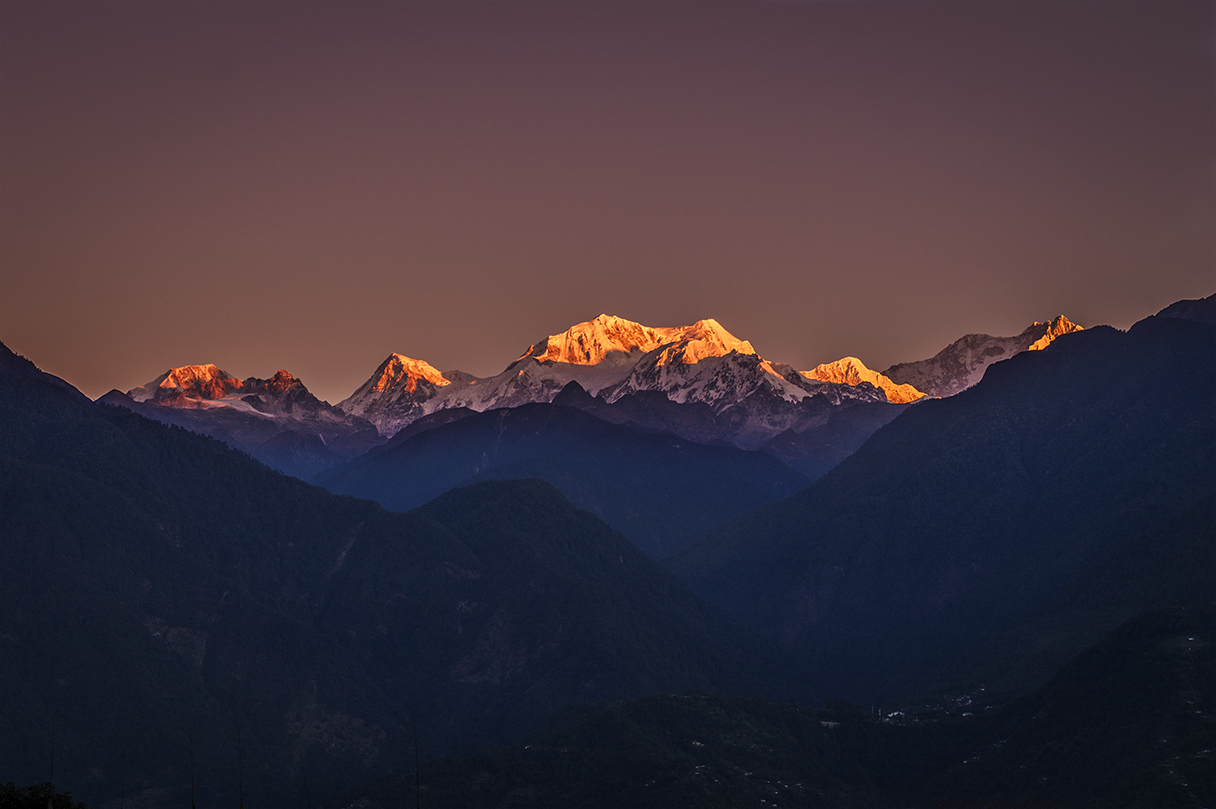
Gyalshing, also spelled Geyzing, is the headquarters of Gyalshing district (West Sikkim), about 10 km below Pelling. It is a working market town rather than a sight: the main hub for shared jeeps to Gangtok, Siliguri, Yuksom and Uttarey, with banks, ATMs and shops. Most travellers pass through.
Best months
Oct–May
Nights we suggest
0 (pass through)
From Gangtok
≈ 105 km · 4.5–5.5 h
Altitude
About 1,600 m
Known for
District HQ, shared jeep hub, banks and market
Permit
Not needed
About Gyalshing
What to know before you go
Gyalshing is the administrative centre of the district that carries its name since the 2021 reorganisation, when West Sikkim was split into Gyalshing and Soreng districts. It sits on a slope below the Pelling ridge, about 10 km by road from Upper Pelling and close to Pemayangtse. Government offices, the district hospital, schools, banks and the main market are here, and its spellings vary: Geyzing, Gezing and Gyalshing all appear on signs.
For travellers, Gyalshing matters mainly as a transport hub. Shared jeeps from Gangtok and Siliguri terminate here, and local jeeps fan out to Pelling, Yuksom, Tashiding, Legship, Dentam and Uttarey. If you are travelling on a budget, you will likely change vehicles here, buy snacks and use an ATM.
The town has a mostly Nepali-speaking population with Limbu, Bhutia and Lepcha communities around it. It is busy in the morning when jeeps leave and quieter by afternoon. There is little to see as such, but a walk through the market shows everyday West Sikkim: vegetable sellers from the villages, cardamom traders and school crowds.
Highlights
What to see and do
Shared jeep hub
Jeeps to Gangtok, Siliguri, Jorethang, Pelling, Yuksom, Tashiding, Dentam and Uttarey leave from Gyalshing, mostly in the morning. Book long-distance seats the day before at the counters or through your hotel.
Banks and ATMs
Gyalshing has several banks and ATMs, more reliable than those in Pelling, Yuksom or Uttarey. Withdraw cash here before heading to villages where card and UPI acceptance is patchy.
Morning market
Walk the market in the morning to see vegetables, greens, local cheese (chhurpi), pickles and fermented foods brought from surrounding villages. It is a working market, not a tourist bazaar.
Close to Pemayangtse
Pemayangtse Monastery and the Rabdentse ruins lie on the road between Gyalshing and Pelling, so you can visit them while changing jeeps or on the way up to Pelling.
Gateway to Legship
Below Gyalshing, Legship sits on the Rangeet with the Kirateshwar Mahadev temple, a Hindu pilgrimage site, and the roads to Tashiding, Ravangla and Jorethang.
The story of Gyalshing
A new district, an old name
In December 2021 Sikkim reorganised its four districts into six. The old West district, with Gyalshing as its headquarters, was divided: the northern part kept Gyalshing as headquarters and took its name, and the southern part, around Soreng, Rinchenpong and Kaluk, became Soreng district. The other old districts were also renamed after their headquarters: Gangtok, Mangan and Namchi. This is why maps and signboards now say 'Gyalshing district' where older guidebooks say 'West Sikkim'. For travellers little has changed on the ground, but the distinction helps when reading official notices about road closures, permits or festivals. Gyalshing itself has long been the place where West Sikkim's roads meet. Before Pelling grew into a hotel town, travellers coming to Pemayangtse or setting out for Yuksom and the Kangchenjunga treks passed through Gyalshing's bazaar, and Wikipedia still notes it as a base for trekking and expeditions towards Kangchenjunga.
Source: Wikipedia: Gyalshing; Gyalshing district; Soreng district
Little known
Things most visitors never hear
Gyalshing district and Soreng district were created on 13 December 2021 from the old West Sikkim district; Soreng district took the Soreng and Mangalbarey subdivisions.
Source: Soreng district administration; Wikipedia: Soreng district
The town's name appears as Geyzing, Gezing and Gyalshing on signs and maps; all refer to the same place.
Source: Wikipedia: Gyalshing
The Kirateshwar Mahadev temple at Legship, a Hindu pilgrimage site on the Rangeet, lies in Gyalshing district a short drive below the town.
From Gangtok about ₹350–500 a seat, 4.5–5.5 hours; from Siliguri about ₹500–650, 5–6 hours. Local jeeps to Pelling cost about ₹50–80. Most long-distance jeeps leave early morning.
Private car
From Gangtok about 105 km via Singtam and Ravangla or Jorethang and Legship, indicatively ₹4,500–6,000. Gyalshing to Pelling is 10 km, 20–30 minutes.
From Bagdogra / NJP
About 125–135 km and 5 hours via Sevoke, Melli, Jorethang and Legship, indicatively ₹5,000–7,000 by private car. NH10 closes after monsoon slides; check current status before you travel.
Permits in West Sikkim
Indian travellers need no permit for Pelling, Yuksom, Khecheopalri, Tashiding or Uttarey. The Dzongri and Goecha La trek needs a Khangchendzonga National Park permit and fees, arranged at Yuksom through a registered trekking agency with a licensed guide. Foreign nationals need the Restricted Area Permit to enter Sikkim, applied for online via the e-FRRO portal after arriving in India, and a Protected Area Permit in a group of two or more for the Dzongri–Goecha La trek. Sikkim charges a ₹50 per tourist fee at check-in. Check current status before you travel.
Gyalshing has a few local hotels used by officials and business travellers, but we do not usually book them for holidays. Stay in Pelling, 10 km up the road, where options run from Hotel Garuda (budget) to Norbu Ghang and Summit Newa Regency (comfort) and The Elgin Mount Pandim (premium), or in Darap's village homestays.
Yes. Gyalshing, Geyzing and Gezing are different spellings of the same town, the headquarters of Gyalshing district (formerly West Sikkim). Signboards, jeep counters and maps use all three. It lies about 10 km below Pelling.
How far is Gyalshing from Pelling?
About 10 km, or 20–30 minutes by road, passing Pemayangtse Monastery and the Rabdentse gate. Shared local jeeps cost about ₹50–80 a seat and a reserved taxi about ₹300–500.
Should I stay in Gyalshing or Pelling?
Stay in Pelling. Gyalshing is a working district town with few holiday hotels and no mountain views to match Pelling's. Use Gyalshing for jeeps, banks and supplies, and stay up the hill in Pelling or in a village homestay.
How do I get a shared jeep from Gyalshing to Gangtok?
Jeeps leave Gyalshing for Gangtok mostly in the early morning; buy a seat the evening before at the counter. Fares are about ₹350–500 and the trip takes 4.5–5.5 hours. Check current status before you travel in the monsoon.
Is there an ATM in Gyalshing?
Yes, Gyalshing has several banks and ATMs, generally more reliable than those in Pelling, Yuksom or Uttarey. Withdraw enough cash here before heading to villages. Card and UPI acceptance varies in remote areas.
What is Gyalshing district?
Gyalshing district is the official name of most of the former West Sikkim district since December 2021, with its headquarters at Gyalshing. It includes Pelling, Yuksom, Tashiding, Dentam and Uttarey. The southern part became Soreng district.
What can I do in Gyalshing?
Walk the morning market, use banks and ATMs, catch shared jeeps, and visit nearby Pemayangtse and Rabdentse. A trip down to Legship's Kirateshwar Mahadev temple on the Rangeet is easy. Otherwise, it is a transit town.
What is the altitude of Gyalshing?
Gyalshing lies at roughly 1,600 m, lower than Pelling at about 2,150 m. Sources vary because the town spreads across a slope. It is milder than Pelling in winter and warmer in summer.
How do I reach Gyalshing from Siliguri?
Shared jeeps from Siliguri to Gyalshing cost about ₹500–650 and take 5–6 hours via Sevoke, Melli, Jorethang and Legship. A private car costs indicatively ₹5,000–7,000. NH10 closes after monsoon slides; check current status before you travel.
Every cost shownRooms, car, permits and our fee, itemised
One person to callFrom Bagdogra or NJP until you are back
No payment to startA deposit only when you book
Get my price
Want Gyalshing in your plan?
Tell us your dates, who is travelling and roughly what you want to spend. We reply within one working day with a day-by-day route and an itemised price.
No payment to start
Permits handled through registered partners
Every hotel, car and fee listed
Price my Sikkim trip
Tell us dates, people and budget. You get a day-by-day plan and an itemised price within one working day.