Why these six belong together
Buddhism in Sikkim is tied to one story: the opening of a beyul, a hidden valley foretold by Guru Padmasambhava, and the crowning of Phuntsog Namgyal as the first Chogyal at Yuksom in 1642 by three Tibetan lamas of the Nyingma school. The best known of them, Lhatsun Namkha Jigme (Lhatsun Chenpo), is linked to Dubdi, Sanga Choeling and the founding of Pemayangtse. Another, Ngadak Sempa Chenpo, is linked to Tashiding. Rabdentse was the royal capital from 1670, and Khecheopalri Lake is sacred to Buddhists and Hindus alike.
Wikipedia's articles on each site describe them as one pilgrimage circuit, and that is how we plan them: as a loop out of Pelling and Yuksom, with time to sit in each courtyard. Dates for the founding of these monasteries vary between sources, and historians such as Saul Mullard (Opening the Hidden Land, Brill, 2011) caution that some of the traditional dates were fixed later. We give the dates the monasteries and Wikipedia use.
| Stop | Traditional date | Altitude | From Pelling | Allow |
|---|---|---|---|---|
| Pemayangtse Monastery | 1640s; enlarged 1705 | ≈ 2,085 m | ≈ 2 km · walk or 10 min drive | 1.5 h |
| Rabdentse ruins | Capital from 1670 | ≈ 2,000 m | ≈ 3 km · walk, plus 1 km forest path | 1–1.5 h |
| Sanga Choeling Monastery | 1697 | ≈ 2,200 m | ≈ 3–4 km · steep walk or drive | 2 h with skywalk |
| Khecheopalri Lake | Sacred lake | ≈ 1,700 m | ≈ 30 km · 1–1.5 h | 1.5 h |
| Dubdi Monastery, Yuksom | 1701 | ≈ 2,100 m | ≈ 35 km · 1.5–2 h, then 45–60 min climb | 3 h |
| Tashiding Monastery | 1641; expanded 1717 | ≈ 1,465 m | ≈ 40 km · 1.5–2 h | 2 h |
Pemayangtse: the senior Nyingma house
Pemayangtse, on a spur above Pelling, began as a small temple linked to Lhatsun Chenpo in the 1640s and was enlarged in 1705 under the third Chogyal, Chakdor Namgyal. It heads the Nyingma monasteries of Sikkim, and its monks have traditionally been ta-tshang, monks of pure lineage drawn from Bhutia families. Its head lama once had the privilege of anointing the Chogyals.
Inside, look for the three-storey main hall with its painted walls and, on the top floor, Zangdok Palri, a carved and painted wooden model of Guru Padmasambhava's heavenly palace made by Dungzin Rinpoche. The annual mask dance, the Guru Drakmar Chaam, falls on the 28th and 29th days of the 12th Tibetan month, usually in February, just before Losar. Check the date with the monastery before you travel.
Rabdentse: the second capital
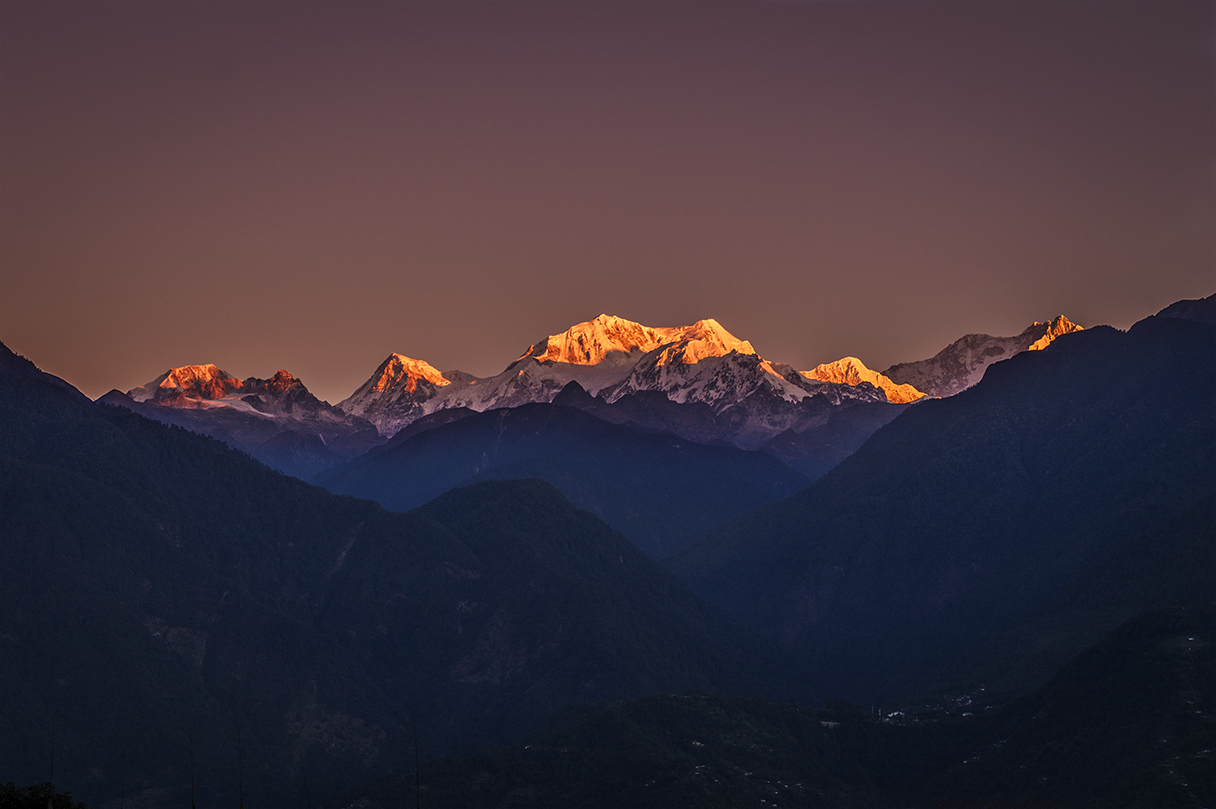
In 1670 the second Chogyal, Tensung Namgyal, moved the court from Yuksom to Rabdentse, on a ridge just below Pemayangtse. What remains are the stone walls of the palace and three chortens on a platform facing the Kangchenjunga range. The Archaeological Survey of India protects the site, and a forest path of about 1 km leads from the road gate to the ruins, past a small pond.
Wikipedia's article on Tensung Namgyal records that his Limbu queen named his new palace Song Khim, meaning new house in Limbu, and that the word later became Sukhim and Sikkim. It is one of several explanations of the state's name, and a neat reminder that the kingdom was Bhutia, Lepcha and Limbu from the start. The capital was destroyed by invading Gorkha forces from Nepal; Wikipedia gives 1814.
We turn this into a priced, day-by-day plan for your dates.
Sanga Choeling: up the ridge
Sanga Choeling, Island of the Secret Mantra Teachings, sits on the ridge above Pelling at about 2,200 m and is dated to 1697. It is one of the oldest monasteries in the west and keeps clay figures dating to the 17th century. The traditional approach is a steep forest path of about 4 km from the Pelling side, 45–60 minutes up; you can also drive most of the way.
Below the monastery stands the Chenrezig statue, a large image of the bodhisattva of compassion, with a glass skywalk that opened in 2018. Pilgrims and tourists now arrive together, so come early in the morning if you want the monastery itself in quiet.
Khecheopalri: the wish-fulfilling lake
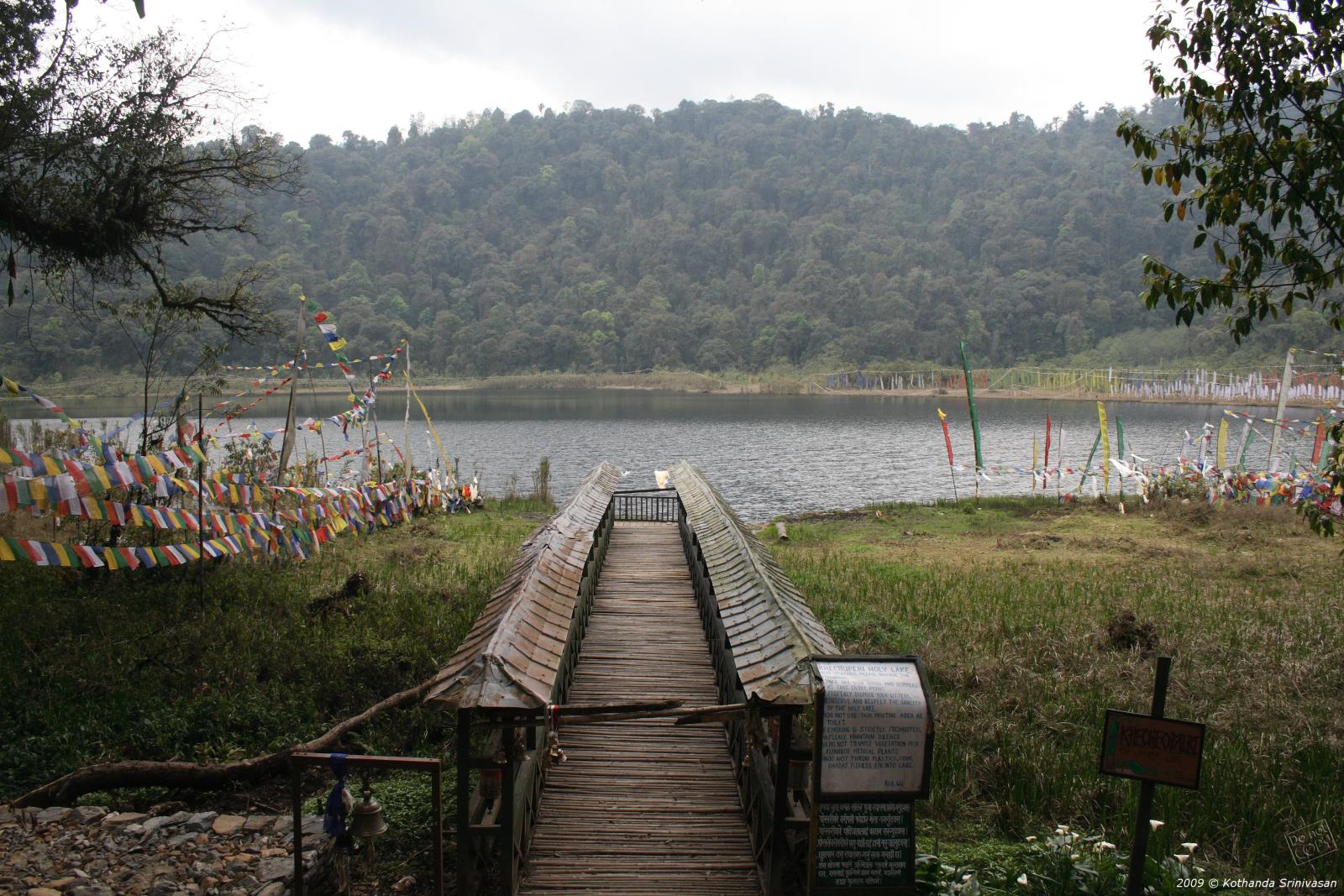
Khecheopalri Lake, about 30 km from Pelling at roughly 1,700 m, is ringed by forest and prayer flags. Wikipedia gives its local name as Sho Dzo Sho, Oh Lady, Sit Here, and records the belief that birds pick fallen leaves off the water so the surface stays clean. It is sacred to Buddhists and Hindus and part of the Demazong, the valley of rice blessed by Padmasambhava in Sikkimese Buddhist tradition.
A short boardwalk leads to a prayer-wheel platform at the water's edge. Do not throw coins or food in the lake, keep voices low and walk the path clockwise. Homestays in Khecheopalri village above the lake make it an easy overnight stop between Pelling and Yuksom.
Dubdi and Yuksom: where it began
Dubdi, the retreat, is traditionally dated to 1701 and often described as the oldest monastery in Sikkim, though Pemayangtse and Tashiding also claim early origins. It stands on a hilltop about 3 km above Yuksom, a 45–60 minute climb through forest; carry water and start before 9 am. The building is small and the caretaker lama is not always there, so plan to enjoy the walk and the view as much as the interior.
Down in Yuksom, visit Norbugang, where stone seats mark the place of the 1642 coronation, and Kathok Lake at the edge of the village, whose water is used in Sikkimese royal and religious ceremonies. Our separate guide on Yuksom in 1642 tells that story in full.
Tashiding: the heart of Sikkim
Tashiding Monastery crowns a conical hill between the Rathong Chu and the Rangeet River, at about 1,465 m and 19 km south-east of Yuksom. Wikipedia describes it as the most sacred in Sikkim and calls it the heart of Denzong. It is associated with Ngadak Sempa Chenpo in 1641 and was expanded in 1717. Among its chortens is Thongwa Rangdol, said to cleanse the sins of anyone who sees it, and the walls are lined with stones carved with mantras.
Bumchu, the holy water festival, is held on the 14th and 15th days of the 1st Tibetan month, usually February or March. The lamas open a sacred vase and read the year ahead for Sikkim from the level of the water. It draws pilgrims from across Sikkim, Darjeeling, Nepal and Bhutan, so book rooms in Yuksom or Pelling early and check the date each year.
- Walk clockwise around chortens, mani walls and prayer wheels.
- Remove shoes and hats in prayer halls, and ask before taking photos inside.
- Cover shoulders and knees; a light shawl helps.
- Leave a small offering in the donation box rather than handing money to monks.
A four-day route that works
We plan the trail as a slow loop so that no day has more than about two hours in a car. It suits families and older travellers as well as pilgrims, and the order below keeps the mountain-view mornings in Pelling and the walks in Yuksom. Swap days to fit Bumchu or the Pemayangtse mask dance if your dates fall right.
A car and driver for the four days costs roughly ₹3,500–4,500 a day for a small car. Local guides who know the monasteries can be booked in Pelling and Yuksom for about ₹1,000–1,500 a day; we recommend one for Pemayangtse and Tashiding, where the murals and chortens need explaining.
- Day 1: Pemayangtse at the morning prayers, Rabdentse ruins, lunch in Pelling, Sanga Choeling and the skywalk in the late afternoon.
- Day 2: Rimbi waterfall, Khecheopalri Lake, Kanchenjunga Falls, on to Yuksom by mid-afternoon.
- Day 3: Dubdi Monastery climb at 8 am, Norbugang and Kathok Lake after lunch.
- Day 4: Tashiding Monastery in the morning, then Legship and Jorethang towards NJP or Ravangla.
Rules, fees, fares and road status change often. Check current status before you travel.