Khangchendzonga National Park covers about 1,784 km² of Sikkim around Kangchenjunga (8,586 m), across Mangan and Gyalshing districts. Notified in 1977, it became India's first mixed UNESCO World Heritage Site in July 2016. Visitors enter on foot from Yuksom (1,780 m), with a park permit, registered agency and licensed guide.
Tibetan nameKangchendzöngaMeans: The five treasures of the high snow (the mountain the park is named after)Source: Wikipedia: Kangchenjunga
Best months
Apr–mid-May and late Sep–Nov
Nights we suggest
2 (Tshoka) to 10 (Goecha La) from Yuksom
From Gangtok
≈ 150 km to Yuksom · 6.5–7.5 h, then on foot
Altitude
≈ 1,220–8,586 m; entry at Yuksom 1,780 m
Known for
UNESCO mixed site, Kangchenjunga, forests, sacred lakes
Permit
Park permit and registered guide; foreigners also RAP and PAP
Khangchendzonga National Park is the great wild heart of Sikkim. It takes in the Sikkim side of Kangchenjunga, the world's third highest mountain, with its glaciers, high lakes, alpine meadows and the deep forested valleys below. Wikipedia gives its area as 1,784 km² in Mangan district (North Sikkim) and Gyalshing district (West Sikkim). To the north it adjoins Tibet's Qomolangma reserve, and to the west Nepal's Kanchenjunga Conservation Area, so the protection runs across three countries.
UNESCO inscribed the park in July 2016 as India's first mixed World Heritage Site, listed for both nature and culture. The natural criteria recognise its scenery and biodiversity across an altitude range of about 1,220 m to 8,586 m. The cultural criteria recognise it as a sacred landscape: for Sikkim's Buddhists the hidden land of Demazong, and for the Lepcha people a place woven into their origin stories and rituals.
There are no roads inside the park. For almost every visitor, the door is Yuksom in West Sikkim, where the trail to Sachen, Tshoka, Dzongri and Goecha La begins. You can walk in for a day, two nights or the full 9-day trek, but every entry needs a park permit, registration at Yuksom and a registered guide. Foreign nationals also need a Protected Area Permit in a group of two or more. Check current status before you travel.
Highlights
What to see and do
India's first mixed World Heritage Site
UNESCO listed the park in July 2016 under four criteria: two natural, for scenery and biodiversity, and two cultural, for its living sacred traditions. Before it, every Indian World Heritage Site was either natural or cultural. Walking in from Yuksom, you pass through both kinds of value at once.
Seven kilometres of altitude
Within about 40 km in a straight line the park climbs from warm valley forest near 1,200 m through oak, maple, magnolia, fir and rhododendron to alpine meadow, glacier and the 8,586 m summit. Few protected areas on Earth pack so much altitude into so little ground.
The Yuksom trail
The trail from Yuksom to Sachen, Tshoka and Dzongri is the only practical way in for most visitors. A two-night walk to Tshoka, a 5–6 day Dzongri trek or the full Goecha La trek all start at the park gate at the top of the village.
Birds and shy mammals
About 550 bird species are recorded, including blood pheasant and satyr tragopan. Snow leopard, red panda, Himalayan tahr and bharal live here too, but are rarely seen. Trekkers regularly see birds in the forests between Yuksom and Tshoka, especially in spring.
A sacred landscape
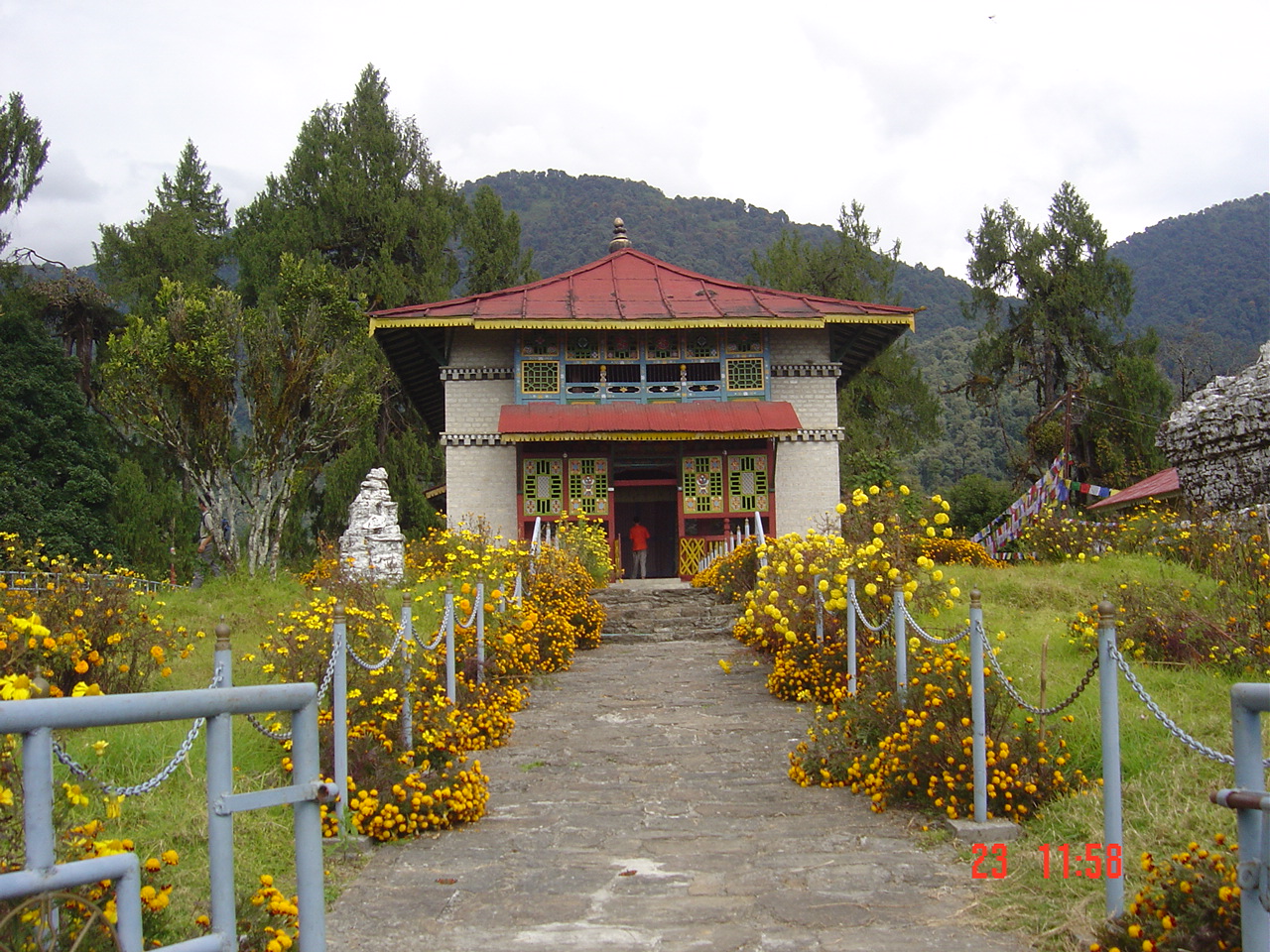
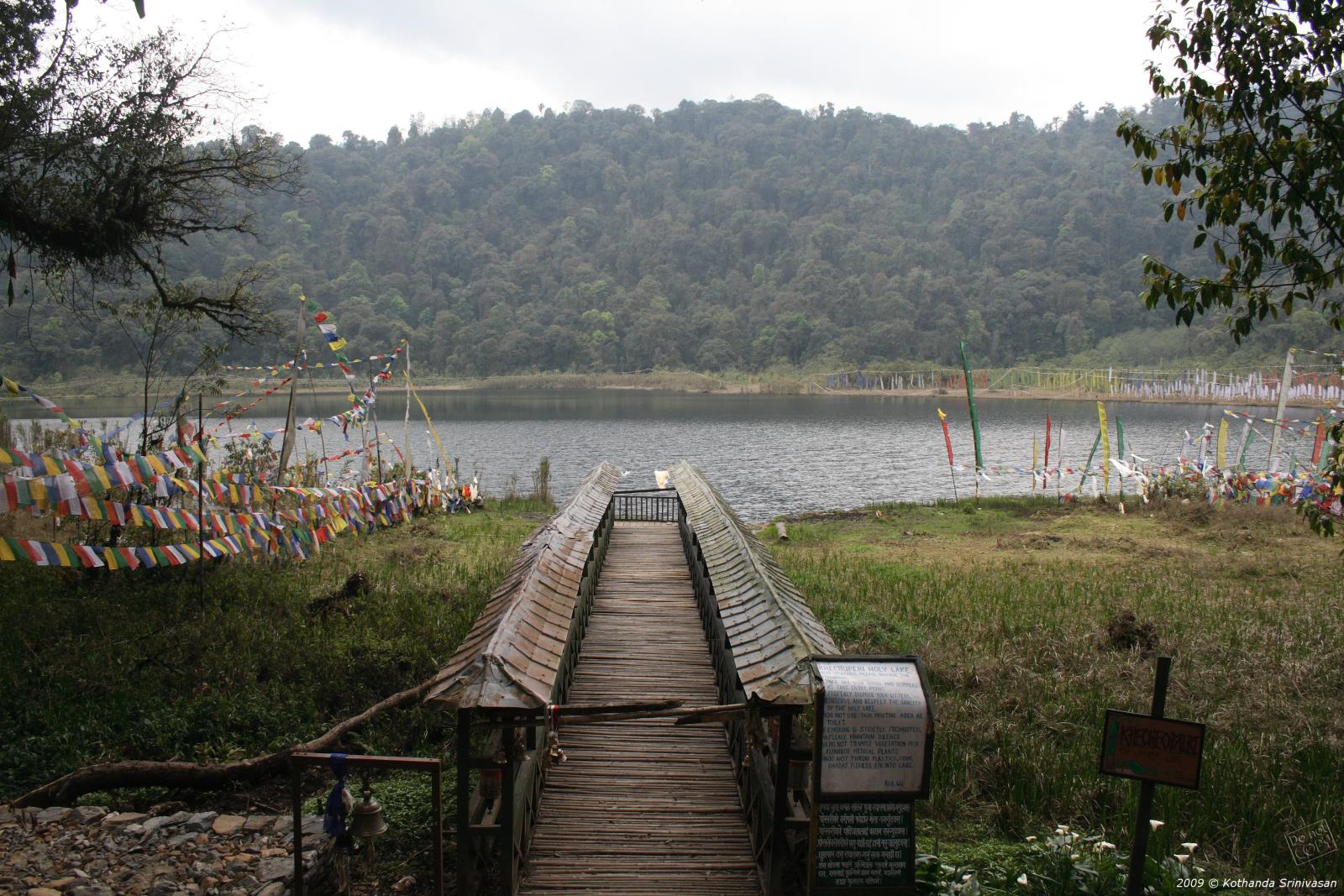
Lakes such as Samiti, caves, rocks and peaks are places of pilgrimage in the Buddhist tradition of Demazong and in Lepcha belief. Prayer flags, mani walls and chortens along the trail are part of that landscape. Walk around them clockwise and leave them undisturbed.
Seen from Pelling
If you cannot trek, the park still fills the view. The line of snow peaks you see from Pelling at dawn, from Kabru to Pandim, is the park's southern skyline. Two nights in Pelling and two in Yuksom take you as close as a road can.
The story of Khangchendzonga National Park
Demazong, the hidden valley of rice
Long before it was a national park, the land around Kangchenjunga was a sacred geography. In Sikkim's Buddhist tradition, Guru Padmasambhava, who brought Vajrayana Buddhism to Tibet in the 8th century, is believed to have blessed this land and concealed it as a beyul, a hidden refuge to be opened in a time of need. Its name is Beyul Demazong, usually translated as 'the hidden valley of rice'. Lakes, caves, rocks and peaks inside the park are named places of pilgrimage, and the mountain itself is worshipped as Dzö-nga, Sikkim's guardian deity, honoured each year at Pang Lhabsol. The Lepcha, considered the earliest inhabitants of Sikkim, have their own older relationship with these mountains, which appear in their accounts of origin and in their rituals. When UNESCO listed the park in 2016, it chose two cultural criteria for exactly this reason, describing a living landscape shared by both traditions. That is why some lakes here may not be camped beside and why, as Wikipedia's article on Kangchenjunga records, the first climbers in 1955 stopped short of the summit at the request of the Chogyal.
Source: UNESCO World Heritage List: Khangchendzonga National Park; Wikipedia: Khangchendzonga National Park; Kangchenjunga
Little known
Things most visitors never hear
Wikipedia records about 550 bird species in the park and six cat species: Indian leopard, clouded leopard, snow leopard, jungle cat, Asian golden cat and leopard cat.
Source: Wikipedia: Khangchendzonga National Park
Camera traps have recorded the dhole, the Asiatic wild dog, in the park at elevations between about 2,500 m and 4,100 m, according to Wikipedia.
Source: Wikipedia: Khangchendzonga National Park
The park is part of the wider Khangchendzonga Biosphere Reserve, which is included in UNESCO's Man and the Biosphere Programme, separate from its World Heritage listing.
Source: Wikipedia: Khangchendzonga National Park
Experiences
Hours worth planning in Khangchendzonga National Park
Reach Yuksom, the park's main gateway, by shared jeep from Gyalshing, Pelling, Tashiding or Legship, indicatively ₹150–250 a seat from Pelling. From Siliguri or Gangtok, take a shared jeep to Gyalshing or Jorethang first. Inside the park, travel is on foot only.
Private car
From Pelling to Yuksom, about 40 km and 2 hours, indicatively ₹2,500–3,500 one way. From Gangtok, about 150 km and 6.5–7.5 hours. Northern routes into the park through Dzongu and Lachen need special permits and are rarely open to ordinary visitors.
From Bagdogra / NJP
About 170 km and 6.5–7.5 hours to Yuksom via Melli, Jorethang, Legship and Tashiding, indicatively ₹6,500–8,500 by private car. Trekking agencies often run shared transport from NJP for about ₹2,000–3,500 return. NH10 closes after heavy rain; the alternative is via Darjeeling. Check current status before you travel.
Permits in West Sikkim
Indian travellers need no permit for Pelling, Yuksom, Khecheopalri, Tashiding or Uttarey. The Dzongri and Goecha La trek needs a Khangchendzonga National Park permit and fees, arranged at Yuksom through a registered trekking agency with a licensed guide. Foreign nationals need the Restricted Area Permit to enter Sikkim, applied for online via the e-FRRO portal after arriving in India, and a Protected Area Permit in a group of two or more for the Dzongri–Goecha La trek. Sikkim charges a ₹50 per tourist fee at check-in. Check current status before you travel.
There are no hotels in the park. On treks, groups camp at designated sites such as Sachen, Tshoka, Dzongri, Thansing and Lamuney, and the Forest Department runs basic trekkers' huts at Tshoka, Dzongri and Thansing. Base yourself in Yuksom before and after: Yuksum Residency and Hotel Tashigang are practical value hotels, and village homestays cost about ₹1,200–2,200 per person with meals. For comfort or premium rooms, stay in Pelling, two hours away, at Norbu Ghang Retreat and Spa or The Elgin Mount Pandim.
Why is Khangchendzonga National Park a UNESCO site?
UNESCO listed it in July 2016 for both natural and cultural value, making it India's first mixed World Heritage Site. The natural criteria recognise its exceptional scenery and biodiversity across about 1,220 m to 8,586 m. The cultural criteria recognise its role as a sacred landscape for Sikkim's Buddhists and the Lepcha people.
How big is Khangchendzonga National Park?
About 1,784 km², according to Wikipedia, with a large buffer zone around it. It spans Mangan district (North Sikkim) and Gyalshing district (West Sikkim), and borders Nepal's Kanchenjunga Conservation Area to the west and Tibet's Qomolangma reserve to the north. It was first notified in 1977.
Can tourists visit Khangchendzonga National Park?
Yes, mainly on foot from Yuksom in West Sikkim, on the trails to Tshoka, Dzongri and Goecha La. You need a park permit, registration at Yuksom and a registered local guide; solo trekking is not allowed. Foreign nationals also need a Restricted Area Permit and a Protected Area Permit. Check current status before you travel.
What is the entry fee for Khangchendzonga National Park?
The park fee has been about ₹350 per Indian for the first seven days plus about ₹40 for each extra day, and about ₹560 per foreign national for seven days plus about ₹80 a day. Camping, guide and porter charges are separate. Your registered agent pays these at Yuksom. Check current status before you travel.
What animals live in Khangchendzonga National Park?
Wikipedia lists about 550 bird species and mammals including snow leopard, clouded leopard, red panda, Himalayan tahr, bharal, musk deer, goral, serow, dhole and Himalayan wolf. Large mammals are shy and rarely seen by trekkers, but birdlife is rich, especially in the forests between Yuksom and Tshoka in spring.
Can I visit the park in a day from Pelling?
Not in a meaningful way. There are no roads inside the park; the nearest entry is on foot from Yuksom, about two hours from Pelling, and even a day walk beyond the gate needs a permit. A better plan is a night or two in Yuksom, with a guided walk into the park's lower forest.
When is the best time to visit Khangchendzonga National Park?
For trekking, April to mid-May for rhododendrons and late September to November for clear mountain views. December to February is very cold, with snow on the upper trail. We avoid the June–August monsoon, when the lower trail is slippery and leech-ridden and views are rare.
Is Kangchenjunga climbed from Sikkim?
No. Wikipedia notes that the Indian side of the mountain is off limits to climbers, out of respect for its place as Sikkim's guardian deity. Trekkers on the Goecha La route stop at a viewpoint at about 4,570 m. The mountain is climbed from Nepal, where the first climbers in 1955 stopped short of the true summit.
Who manages Khangchendzonga National Park?
The Sikkim Forest Department manages the park, working with village bodies such as the Khangchendzonga Conservation Committee in Yuksom on trail clean-ups, guide training and limits on firewood use. Rules on permits, camping and waste are firmly enforced at Yuksom and on the trail. Check current status before you travel.
Every cost shownRooms, car, permits and our fee, itemised
One person to callFrom Bagdogra or NJP until you are back
No payment to startA deposit only when you book
Get my price
Want Khangchendzonga National Park in your plan?
Tell us your dates, who is travelling and roughly what you want to spend. We reply within one working day with a day-by-day route and an itemised price.
No payment to start
Permits handled through registered partners
Every hotel, car and fee listed
Price my Sikkim trip
Tell us dates, people and budget. You get a day-by-day plan and an itemised price within one working day.