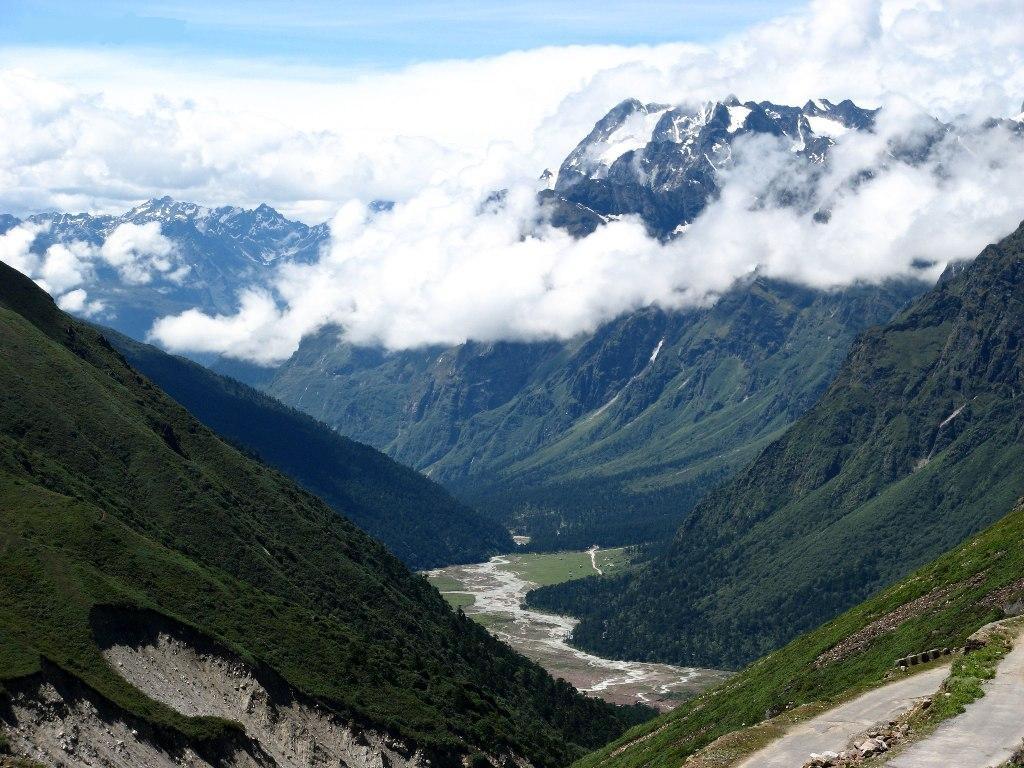
The one number that sets the price
The biggest line in any North Sikkim quote is not the hotel. It is the vehicle. Everything north of Mangan sits inside a Protected Area, so the trip must run in a registered North Sikkim SUV with a local driver, and that vehicle costs the same whether two people sit in it or six. Fill it and the price per person nearly halves.
That is why you see such different prices for what looks like the same trip. A couple in their own Scorpio and a solo traveller on a shared seat are buying the same road, the same permit and often the same lodge, but split the vehicle very differently.
All figures below are indicative 2026 ranges in INR, per person on twin sharing unless we say otherwise. Season, lodge and the state of the road move them. Check current status before you travel.
What lodges cost in Lachung and Lachen
North Sikkim lodges are simpler than Gangtok hotels at the same price. You arrive in the dark and leave at dawn for Yumthang or Gurudongmar, so most of the money goes on warmth and hot water rather than views. Rates almost always include dinner and breakfast, and many include lunch on the excursion day.
Indicative 2026 bands per room per night, with meals: budget ≈ ₹2,000–3,000, for a clean room, a shared heater and bucket hot water; standard ≈ ₹3,000–4,500, with an attached bathroom, a geyser and an electric blanket; premium ≈ ₹5,000–8,000, with a larger room and a room heater. Lachung has one or two resorts above ₹12,000 a night. Lachen has no luxury stock, and after the long closure some lodges are still reopening.
Homestays in Dzongu, if you add a night there, cost ≈ ₹1,500–2,500 per person with all meals.
We turn this into a priced, day-by-day plan for your dates.
Worked examples for 2026
Here are the trips most people ask us for, priced from Gangtok and back. They leave out Gangtok hotels, the Bagdogra or NJP transfer, flights and 5 percent GST on package quotes.
- 2N/3D Lachung, shared seat, budget lodge: seat with permit ≈ ₹3,000–3,500, two nights with meals ≈ ₹3,000–4,000 each. Total ≈ ₹6,500–8,000 per person.
- 2N/3D Lachung, couple, reserved Scorpio, standard lodge: vehicle ≈ ₹16,000 split two ways is ₹8,000 each, lodge ≈ ₹3,500 each for two nights, Zero Point ≈ ₹1,750 each. Total ≈ ₹13,000 per person.
- 3N/4D Lachen 2 nights and Lachung 1, couple, reserved Scorpio, standard lodges: vehicle ≈ ₹23,000 is ₹11,500 each, lodges ≈ ₹5,250 each. Total ≈ ₹16,500–17,500 per person with Zero Point.
- The same 3N/4D loop for six friends in one Scorpio: vehicle ≈ ₹3,800 each, lodges ≈ ₹5,250 each. Total ≈ ₹9,500–10,000 per person.
What is included and what is not
A fair North Sikkim package from Gangtok includes the vehicle with driver and fuel, the driver's stay and food, permit processing, lodges with dinner and breakfast, and usually lunch on the drive days. It should name the vehicle model and tell you whether the lodges are budget, standard or premium.
What is usually not included: the Zero Point extension of ≈ ₹3,000–4,000 per vehicle, paid in Lachung and dependent on snow; snow boots, coats and gloves hired at ≈ ₹100–300 an item; room heater charges at some lodges; driver tips of ≈ ₹500–1,000 a trip; and GST. The ₹50 Sikkim tourist fee is collected once by your first hotel and covers 30 days. Ask whether your quote lists each of these, because the cheapest headline price often leaves two or three out.
Watch for three red flags in a very cheap quote: no vehicle model named, lodges described only as 'deluxe' with no name, and a 2-night Lachen and Lachung loop priced below the Lachung-only rate. Each usually means a crowded shared vehicle, a basic room sold as standard, or extras collected in cash up north.
Full trips from Bagdogra or NJP
Most people do not buy North Sikkim on its own. They fly into Bagdogra or take a train to New Jalpaiguri, spend a night or two in Gangtok, and go north from there. The Bagdogra to Gangtok leg is ≈ 124 km and 4.5–5 hours, and a reserved small car costs ≈ ₹3,500–4,500 one way; a shared jeep seat from Siliguri is ≈ ₹400–600. NH10 closes in the monsoon after slides, and then cars run via Kalimpong or Lava, adding an hour or two.
These are our own from-prices for whole trips in 2026, per person on twin sharing, so you can see how the North leg sits inside a holiday.
- Budget, 3 nights Gangtok and Lachung on shared seats: from ≈ ₹8,500.
- Budget, 6 nights Gangtok, Lachen and Lachung with budget hotels: from ≈ ₹18,500.
- Value, 5 nights Gangtok and North Sikkim in a private car with 3-star hotels: from ≈ ₹25,000.
- Comfort, 6 nights with Dzongu, Lachen and Lachung in a private SUV: from ≈ ₹46,000.
- Premium, 6 nights with a top Gangtok hotel and the best Lachung resort: from ≈ ₹1,05,000.
Seasons that move the price
March and late November are the best value: lodges sit near their base rates and the skies are usually good. April to June and October to early December cost 20 to 40 percent more for lodges and 10 to 20 percent more for vehicles, because these are the rhododendron and clear-sky seasons and Indian school and Puja holidays fall in them. Late December spikes again.
January and February are cheap, but snow can close Zero Point and the road above Thangu. July to September is cheapest on paper, but landslides can suspend permits at a day's notice, and the Lachen road was shut for most of 2024 and 2025. A cheap monsoon quote is only cheap if the trip runs.
How to cut the cost safely
The best saving is a full vehicle: four to six people in one SUV. The second is timing: March or the second half of November. The third is choosing standard lodges, because you spend little waking time in them.
Do not save by cutting a night if you are going to Gurudongmar with elders. A third night, ideally a second one in Lachen, gives the body time before 5,183 m and costs ≈ ₹5,000–8,000 more for the whole vehicle. Do not save by skipping travel insurance either: a policy with high-altitude and trip-disruption cover is worth its price on these roads. And always ask, in writing, what is refunded if permits stop before you leave Gangtok.
Rules, fees, fares and road status change often. Check current status before you travel.