Gurudongmar Lake is a glacier-fed lake near the Tibet border, about 67 km and 3–3.5 hours from Lachen. The Sikkim government gives its altitude as 5,430 m; satellite data suggest nearer 5,150 m. Sacred to Buddhists, linked with Guru Padmasambhava, it is open to Indian nationals only, on a pre-dawn trip from Lachen.
Tibetan nameGurudongmarMeans: named after Guru Padmasambhava (Guru Rinpoche), who in Buddhist tradition visited the lakeSource: Wikipedia, Gurudongmar Lake
Best months
May–June, October–November
Nights we suggest
0 (visit from Lachen)
From Gangtok
≈ 190 km · via a night in Lachen
Altitude
≈ 5,150 m (5,430 m official figure)
Known for
Sacred lake, Padmasambhava tradition, frozen winters, plateau views
Permit
Protected area permit via a registered agent; Indian nationals only
Gurudongmar lies on a high, bare plateau north of the Khangchengyao range, a few kilometres south of the border with Tibet. The water is deep blue in clear weather and freezes almost completely from about November to May. Prayer flags, a small shrine and a line of chortens stand on the shore. Around it, the land looks more like Tibet than Sikkim: brown moraine, wide sky and snow peaks.
Every visit follows the same pattern. You sleep at Lachen, leave around 4 to 5 am, breakfast at Thangu, cross the plateau past an army check post and reach the lake by about 8 or 9 am. You stay 30 to 45 minutes, then drive back down before wind and cloud build, usually reaching Lachen for lunch and continuing to Lachung or Gangtok.
This is the highest place most visitors will ever stand. The Government of Sikkim gives 5,430 m (17,800 ft); satellite elevation data put the lake surface around 5,150 m. Either way, altitude sickness is a real risk, even for fit people. Children under five are not permitted, foreigners are not allowed, and the road reopened only in September 2026 after long closures. Check current status before you travel.
Highlights
What to see and do
The blue lake on the plateau
On a clear morning the lake is deep blue under snow peaks, with prayer flags snapping in the wind. The light is best between 8 and 10 am, before cloud and wind build.
A pilgrimage shore
Chortens, prayer flags and a small shrine line the shore. Pilgrims walk clockwise, offer prayers and collect water. Visitors are welcome to watch quietly and join in respectfully.
The frozen lake
From about November to May the lake freezes over, leaving a white sheet under the peaks. In tradition, one patch never freezes; look for it from the shore.
Breakfast at Thangu
Thangu, about 30 km above Lachen at about 3,900 m, is the breakfast stop, with simple eateries serving tea, parathas and noodles. It is also where people who feel unwell can wait.
Tibet-like landscape
Above Thangu the road crosses a high, treeless plateau of moraine and grass, with yaks and, with luck, blue sheep. It feels like a different country from the forested valleys below.
The story of Gurudongmar Lake
The lake that Guru Rinpoche touched
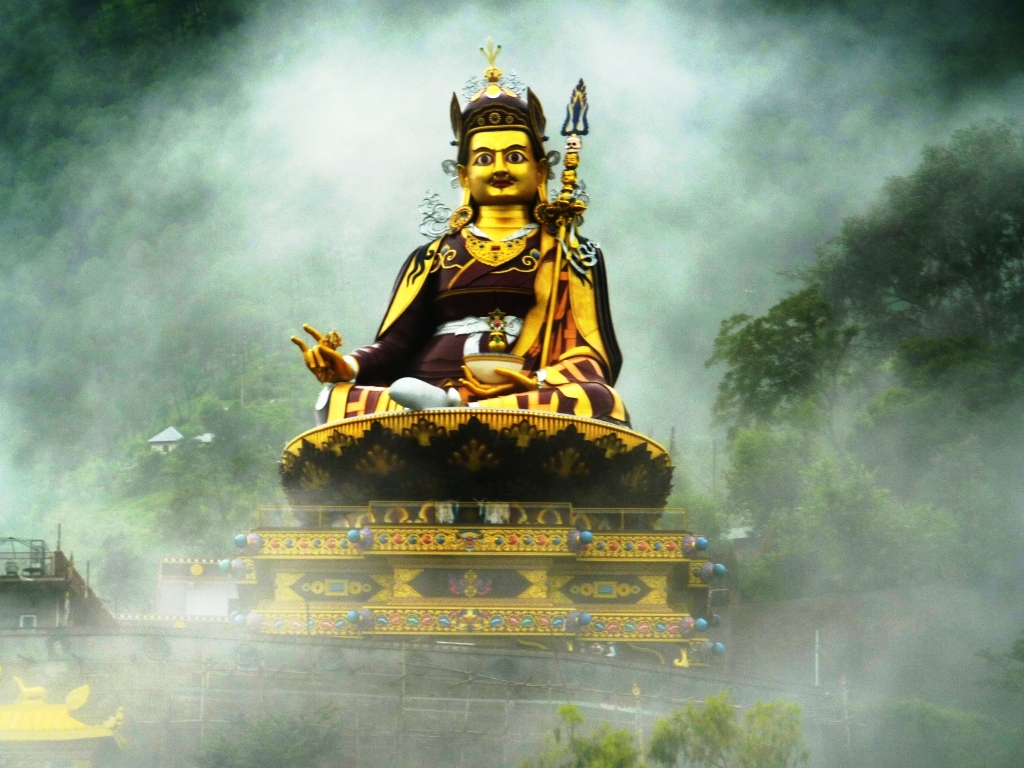
Gurudongmar is named after Guru Padmasambhava, the 8th-century teacher revered in Sikkim as Guru Rinpoche, who in Buddhist tradition brought the dharma to Tibet and blessed the hidden land of Sikkim. According to the local Buddhist belief recorded in Wikipedia's article on the lake, Padmasambhava passed this way on his return from Tibet. The lake, then called by another name, stayed frozen for most of the year, and the people of the area asked him for help with water. He touched a small part of the lake, and that part, the tradition says, never froze again, giving the herders drinking water through the winter. The lake became a place of pilgrimage. Visitors of other faiths also pray here today, and since 2001 the shrine at the shore has been looked after by Lachen Monastery, which keeps a lama as caretaker. Scientifically, the lake is moraine-dammed and fed by the Gurudongmar glacier, and Wikipedia notes that one of its outflows joins Tso Lhamo, a source of the Teesta. In winter, look for the patch of open water that pilgrims point to.
Source: Wikipedia, Gurudongmar Lake and Padmasambhava
Little known
Things most visitors never hear
The lake covers about 118 hectares with a shoreline of about 5.34 km, and is fed by the Gurudongmar glacier behind a moraine dam.
Source: Wikipedia, Gurudongmar Lake
Tso Lhamo, about 5 km east and fed by glaciers of the Pauhunri area, is considered a source of the Teesta; Joseph Hooker called it Cholamoo in 1849.
Source: Wikipedia, Tso Lhamo Lake
National Highway 310C, about 100 km long, runs from Chungthang via Lachen and Thangu to the lake, one of the highest roads open to tourists in India.
Every Lachen package includes the lake. Vehicles leave Lachen at 4–5 am, take 3–3.5 hours for about 67 km via Thangu, and return by lunchtime.
Private car
A private registered SUV arranged through an agent allows an earlier start and the option to turn back at Thangu if anyone feels unwell. The same Indians-only permit applies.
From Bagdogra / NJP
Drive to Gangtok (4.5–5 hours by NH10, or via Kalimpong when NH10 is closed), stay a night, go to Lachen the next day and to the lake the morning after. There is no same-day route.
Indian travellers need a protected area permit for Lachung, Yumthang, Zero Point, Lachen, Thangu and Gurudongmar, issued only through Sikkim Tourism-registered agents and tied to a registered tourist vehicle; operators require a minimum two-night stay. Dzongu needs its own permit, usually obtained in Mangan. Children under five are not permitted in North Sikkim protected areas. Foreign nationals need the online Sikkim restricted area permit and may visit Lachung, Yumthang and Zero Point on a group permit, but not Gurudongmar; for Lachen and Thangu, ask us. Check current status before you travel.
There is no accommodation at the lake or on the plateau for tourists. Stay in Lachen, about 67 km below. Lachenpa family homestays are the budget option, with hosts used to cooking breakfast at 3:30 am. Summit Gangchen, the largest hotel in Lachen, offers heated beds and a reliable early start. Thangu has very basic lodging, but sleeping there at about 3,900 m without prior acclimatisation is not wise for most visitors.
Spend a night in Gangtok and one in Lachen first; never try to reach the lake faster.
Stay 30–45 minutes, walk slowly and do not run or climb at the shore.
Wear sunglasses, sunscreen and lip balm; UV at 5,000 m is fierce.
Carry ID and permit copies for the army check post before the lake.
Do not throw coins or offerings into the lake; offer at the shrine instead.
Month by month
When to visit Gurudongmar Lake
JFMAMJJASOND
BestGoodAvoid or closed
Gurudongmar Lake is at 5,150 m. Spend a night lower down first, climb slowly and drink water. Headache, nausea or breathlessness at rest mean go down. The altitude ladder.
The Government of Sikkim gives 5,430 m (17,800 ft), and that figure is on signs and in most guides. Satellite elevation data put the lake surface at about 5,150 m. Either way it is one of the highest lakes in India that tourists can reach, and high enough to cause altitude sickness.
Is Gurudongmar Lake open in 2026?
As we understand it, the lake reopened with Lachen on 9 March 2026, closed again in April after a landslide, and permits resumed around 11–12 September 2026 after road repairs. Snow and army orders can close it at short notice. Check current status before you travel.
Can foreigners visit Gurudongmar Lake?
No. Gurudongmar is open to Indian nationals only, with a protected area permit through a registered agent. Foreign nationals can usually visit Lachung, Yumthang and Zero Point instead. Check current status before you travel.
Can children go to Gurudongmar?
Children under five are not permitted in North Sikkim protected areas. Older children may go, but the altitude affects them as much as adults, and they may not report symptoms. Many families leave younger children with a parent at Thangu or Lachen.
When does Gurudongmar Lake freeze?
The lake is usually frozen from about November to mid-May, according to Wikipedia. In late October and November you may see it partly frozen, and in May the ice begins to break up. Tradition holds that one part never freezes.
How long can we stay at Gurudongmar Lake?
Plan on 30 to 45 minutes. Drivers want to leave before wind and cloud rise, usually by 10 or 11 am, and longer stays at this height increase the risk of altitude sickness. Use the time for a slow walk and a few photographs.
Can I visit Gurudongmar from Gangtok in one day?
No. The lake is about 190 km from Gangtok and above 5,000 m. Going straight up from Gangtok would be dangerous and is not permitted on tourist itineraries. Stay at least one night in Lachen first.
What should I wear to Gurudongmar?
Dress for −10 °C with wind, even in May or October: thermals, fleece, down jacket, windproof outer layer, woollen cap, gloves, warm socks and sturdy shoes. Add sunglasses, sunscreen and lip balm, since UV and glare are intense.
Are there toilets or food at Gurudongmar Lake?
Facilities at the lake are minimal. Use the toilets at Lachen and Thangu, and eat breakfast at Thangu, where simple eateries serve tea, parathas and noodles. Carry water, snacks and tissue, and bring all rubbish back with you.
Every cost shownRooms, car, permits and our fee, itemised
One person to callFrom Bagdogra or NJP until you are back
No payment to startA deposit only when you book
Get my price
Want Gurudongmar Lake in your plan?
Tell us your dates, who is travelling and roughly what you want to spend. We reply within one working day with a day-by-day route and an itemised price.
No payment to start
Permits handled through registered partners
Every hotel, car and fee listed
Price my Sikkim trip
Tell us dates, people and budget. You get a day-by-day plan and an itemised price within one working day.