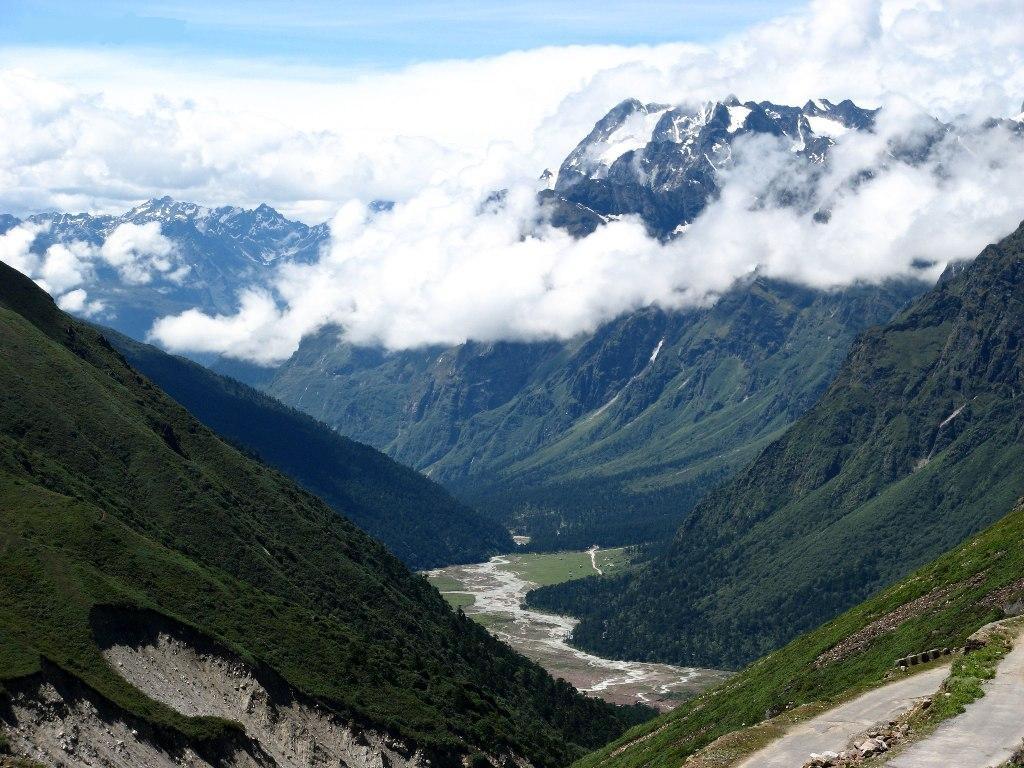
The lake and why it is hard
Gurudongmar is a glacial lake on the high plateau of Mangan district (North Sikkim), about 5 km south of the Tibetan border. Its height is quoted differently: about 5,183 m (17,000 ft) on most travel and road signs, and 5,430 m (17,800 ft) by the Sikkim government, while terrain maps suggest it is a little under 5,150 m. Whichever figure you use, it is higher than Everest Base Camp in Nepal, and you reach it by car in three hours from a village at 2,750 m.
That speed is the problem. Trekkers climb to 5,000 m over ten days. On the Gurudongmar drive you gain about 2,400 m in a morning, from Lachen through Thangu at about 3,900 m to the lake. At the shore the air holds roughly half the oxygen it does at sea level. Most healthy adults manage a short visit well, but some feel very unwell, and a few become seriously ill.
The lake is sacred to Buddhists, who link it with Guru Padmasambhava, and to Sikhs. According to the Wikipedia article on the lake, it stays frozen from about November to mid-May. Please keep it clean and quiet.
The Gurudongmar day, hour by hour
This is a typical schedule. Your driver sets the exact time the night before, based on the weather and Army instructions.
| Time | Place | Altitude | What happens |
|---|---|---|---|
| 4:00–5:00 am | Lachen | ≈ 2,750 m | Leave in the dark with tea and a packed breakfast |
| 6:00–6:30 am | Thangu | ≈ 3,900 m | Tea stop, toilets; last decision point |
| 7:30–8:30 am | Gurudongmar Lake | ≈ 5,183 m | 20–30 minutes at the shore, walk slowly |
| 9:30 am | Chopta Valley area | ≈ 3,900 m | Short stop on the way down, weather allowing |
| 11:00 am–noon | Lachen | ≈ 2,750 m | Lunch, then rest or cross to Lachung |
Know the warning signs
Acute mountain sickness (AMS) is common above 2,500 m and feels like a bad hangover: headache, nausea, loss of appetite, dizziness, unusual tiredness and poor sleep. Mild AMS often settles with rest, water and no further climbing. On the Gurudongmar day the cure is simple and quick: go down.
Two rarer conditions are emergencies. Fluid on the lungs (HAPE) shows as breathlessness at rest, a wet cough, a rattling chest or blue lips. Fluid on the brain (HACE) shows as confusion, stumbling, slurred speech or extreme drowsiness. Either one means descending immediately and seeing a doctor; the Army and health posts on the route can help. Do not wait to see if it improves.
- Turn back if a headache gets worse despite rest and water.
- Turn back if anyone is breathless while sitting still.
- Turn back at once for confusion, unsteady walking or a child who becomes listless.
- Tell your driver; they have seen it before and will not argue.
We turn this into a priced, day-by-day plan for your dates.
Who should skip the lake
Children under 5 are not permitted in North Sikkim at all. Beyond that, we advise against Gurudongmar for anyone with heart disease, uncontrolled blood pressure, asthma or other lung conditions, severe anaemia or sickle cell disease, and for pregnant travellers, unless their own doctor has cleared a short visit to 5,000 m. Anyone who had AMS badly on a past trip should think twice.
Many families split the group: the fit adults go to the lake while children, seniors and anyone feeling poorly stay at Lachen or wait at Thangu. That is a sensible choice, not a lost day. Yumthang above Lachung, at 3,564 m, gives the same high-valley feeling at a far kinder height. Foreign nationals cannot visit Gurudongmar in any case.
How to acclimatise properly
Never attempt Gurudongmar on the day you drive up from Gangtok. It is not permitted and it is not safe. The minimum is one night at Lachen, and the better plan is two: arrive, rest a full day with a short walk to Lachen Monastery, and go to the lake on the third morning. That is why we build most Gurudongmar trips as 3N/4D or longer, with two nights in Lachen.
A night or two in Gangtok (1,650 m) before going north also helps, as does a gentle start in Dzongu (about 700–1,500 m). Drink 3 to 4 litres of water a day, skip alcohol and smoking up north, eat light carbohydrate meals, and walk slowly. Some travellers take acetazolamide to help acclimatisation; it is a prescription medicine with side effects, so ask your own doctor before the trip rather than borrowing tablets on the road.
Three ways to build the trip
How you schedule the nights matters more than any pill or oxygen can. These are the three shapes we use, from the hardest to the gentlest.
The 2-night loop: Gangtok to Lachen on day one, Gurudongmar at dawn on day two, then down and across to Lachung for the night, Yumthang on day three and back to Gangtok. It works for fit young adults who have already spent a night or two in Gangtok, but day two is long and you reach the lake after a single night at 2,750 m.
The 3-night loop: two nights in Lachen, one in Lachung. Either you go to the lake on the first morning and rest on the afternoon of day two, or, better, you spend the second day walking around Lachen and go to the lake on day three. This is the plan we suggest for most travellers, including healthy seniors.
The slow plan: a night in Dzongu at about 1,200 m on the way up, then two nights in Lachen, then Lachung. Three steps up instead of one jump. It suits families with older children, first-time Himalaya travellers and anyone who has felt the altitude before. It also gives a fall-back if the Lachen road closes: you still have Dzongu and Lachung.
What to carry on the day
- Warm layers: thermal inner, fleece, down or padded jacket, windproof shell, woollen cap, gloves. It is often −5 to −15 °C at dawn.
- Sunglasses with UV protection and sunscreen; the light off snow and water is harsh.
- A refillable bottle with warm water, and dry snacks such as biscuits, nuts and chocolate.
- Your ID and permit copy in a pocket for the check posts.
- A small portable oxygen can is often sold in Lachen; it is a comfort, not a treatment, and does not replace going down.
- Your regular medicines, a strip of paracetamol, and any prescription your doctor gave you for altitude.
At the shore
Walk, do not run. Climbing the few steps to the viewpoint feels like a long staircase at this height. Keep the visit to 20 to 30 minutes, take your photos, and then go down. Avoid lying on the ground or napping in the car at the lake. Do not throw coins, scarves or plastic into the water. Check current road and permit status before you travel, since the Lachen road reopened only in September 2026 after a long closure.
On the way down, stop at Thangu or the Chopta Valley area only if everyone feels well, and keep the stop short. Most people feel better within an hour of leaving the lake. If anyone still has a strong headache or breathlessness back in Lachen, do not cross to Lachung that afternoon: rest, drink water, and see the health centre in Lachen or Chungthang. Tell us, and we will rework the rest of the trip.
Rules, fees, fares and road status change often. Check current status before you travel.