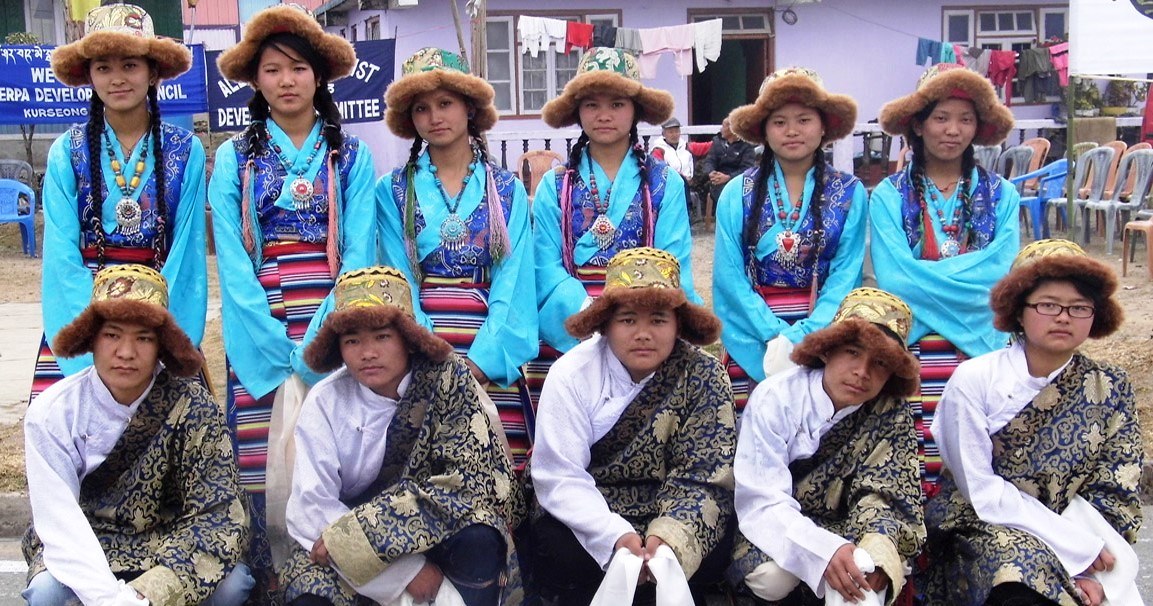
Okhrey is a mainly Sherpa village at about 2,300 m in Soreng district, 8 km below Hilley and the Barsey Rhododendron Sanctuary. It has many family homestays, a Nyingma monastery built in 1950 and quiet farm lanes, and is the most practical base for the Barsey walk, about 125 km from Siliguri.
Best months
March–May and October–December
Nights we suggest
1–2
From Gangtok
≈ 125 km · 5.5–6 h
Altitude
≈ 2,300 m
Known for
Sherpa homestays, 1950 Nyingma monastery, base for Barsey
Permit
Not needed for Indians; foreigners need Sikkim's RAP (e-FRRO)
About Okhrey
What to know before you go
Okhrey sits on a high, open slope in the west of Soreng district, at about 2,300 m, a few kilometres from the Nepal border. It is one of the revenue circles of Soreng subdivision, and most of its families are Sherpa, the Tibetan-speaking Buddhist community whose name means people from the east. Houses are spread along the road and up the hill, with prayer flags, small chortens and vegetable gardens between them.
Over the last two decades the village has turned towards travellers walking to the Barsey Rhododendron Sanctuary, whose road-end gate at Hilley is 8 km above. Many families have opened rooms, and their multi-storey wooden-panelled houses now host visitors through the spring bloom and the clear autumn months. Wikipedia's sanctuary article notes the homestays at Okhrey; the Soreng district administration lists Okhrey as a revenue circle.
Okhrey is cooler and quieter than Rinchenpong or Soreng town. Evenings are for the kitchen fire, butter tea or milk tea, and early nights before a dawn start for Barsey. Up the long flight of steps through the village's rhododendron park is Ugen Thondroling Monastery, built in 1950 and following the Nyingma school. Stay a night at least, two if you want a slow day in the village.
Highlights
What to see and do
Ugen Thondroling Monastery
Climb the long flight of steps through the village rhododendron park to Okhrey's gompa, built in 1950 and following the Nyingma school. It is small and quiet, with views across the valley. Ask before entering the prayer hall, walk clockwise and leave a small offering.
Base for Barsey
Hilley, the gate to Barsey Rhododendron Sanctuary, is 8 km up the road, 30–40 minutes by car. Leave at dawn, walk 4–5 km to the Barsey ridge, and be back for a late lunch. Homestays arrange taxis for about ₹600–800 one way.
Sherpa family homestays
Okhrey has dozens of homestays in wood-panelled family houses, at about ₹1,200–2,000 per person with meals. Expect rice, dal, garden vegetables, eggs and, if you ask, Sherpa dishes. Rooms fill from late March to May, so book ahead.
Village lanes and chortens
Walk the lanes between houses and terraces in the late afternoon, past chortens, mani walls and prayer flags. Children practise football, farmers bring in potatoes and fodder, and the light turns gold on the hills to the south.
Rhododendron park in spring
The village's own rhododendron park, on the slope below the monastery, flowers from about March to April. It is a gentle preview of Barsey for those who cannot do the longer walk, and a good spot for photographs.
Clear winter skies
From November to February, Okhrey's nights are frosty but its days are often bright and sharp. It is the quietest time to visit, with homestays half-empty and rates lower. Bring proper warm clothes; rooms are rarely heated.
The story of Okhrey
Sherpa homes on Sikkim's western edge
The Sherpa are best known from Nepal's Khumbu, but Sherpa families have lived in Sikkim and the Darjeeling hills for generations, and the 2011 census recorded about 3.5 per cent of the people of what is now Soreng district speaking Sherpa as their first language. The name comes from Tibetan shar (east) and pa (people): people from the east, a reference to their origins in eastern Tibet. In Okhrey their Buddhism follows the Nyingma, the oldest of the Tibetan schools, and the village gompa, Ugen Thondroling Monastery, was built in 1950. Its name honours Guru Ugyen, Padmasambhava, the teacher Nyingma Buddhists credit with bringing Buddhism to the Himalaya. Inside, look for images of Guru Rinpoche, the eight-spoked wheel and the butter lamps kept burning by the caretaker. Okhrey's homestays grew from this community: families who farmed potatoes, maize and cardamom, and grazed animals in the high forest before Barsey became a sanctuary, now host walkers in the same houses. Ask your hosts about Losar, the Tibetan new year, which Sherpa families celebrate in February or March.
Source: Wikipedia: Sherpa people; Wikipedia: Soreng district (2011 census languages); Two Together travel guide (Ugen Thondroling Monastery, 1950, Nyingma)
Little known
Things most visitors never hear
In the 2011 census, about 3.5 per cent of people in what is now Soreng district gave Sherpa as their first language, and Okhrey is one of the main Sherpa villages of the district.
Source: Wikipedia: Soreng district
Okhrey is one of the revenue circles of Soreng subdivision, so although guidebooks still call it West Sikkim, its land records and offices now fall under Soreng district.
Source: Soreng district administration
Ugen Thondroling Monastery above the village was built in 1950 and follows the Nyingma school of Tibetan Buddhism, reached by a long flight of steps through the village's rhododendron park.
Take a shared jeep from Siliguri or Jorethang to Sombaria (Jorethang–Sombaria about 28 km, 1.5 hours, ₹100–150), then a local jeep or a reserved taxi for the 14 km to Okhrey, about ₹700–1,000 reserved. Some jeeps from Jorethang run to Okhrey directly in the morning; ask at the stand.
Private car
Okhrey is about 30 km from Soreng (1–1.5 hours), 42 km from Jorethang (2 hours) and about 48 km from Rinchenpong via Soreng (2.5 hours). From Gangtok allow about 5.5–6 hours via Melli and Jorethang. A small car from Rinchenpong costs about ₹3,000–3,500 one way.
From Bagdogra / NJP
Okhrey is about 125 km from Siliguri, 5–6 hours via Sevoke, Melli, Jorethang and Sombaria. A reserved cab costs about ₹4,500–6,500. NH10 along the Teesta closes after monsoon slides, when cars go via Kalimpong instead. Check current status before you travel.
Indian travellers need no special permit anywhere in Soreng district. You pay Sikkim's ₹50 tourist fee, collected by your hotel or homestay and valid 30 days, and an entry ticket at the Hilley checkpost for the Barsey Rhododendron Sanctuary, about ₹50 for Indians. Foreign nationals need Sikkim's Restricted Area Permit, which since 12 January 2026 is applied for online on the e-FRRO portal after arriving in India, with approval in 24–48 hours. Foreigners pay a higher Barsey entry fee. Check current status before you travel.
Okhrey is a homestay village; there are no hotels. Sherpa families run dozens of rooms across the village, most with attached bathrooms in newer buildings, at about ₹1,200–2,000 per person a night with meals. Sherpa Lodge is one of the better-known, with seven wood-panelled rooms, and travel writers also mention Kyilkhor Inn and Royal Barsey Homestay. For a dawn start at the trail, small homestays at Hilley, 8 km above, cost about ₹1,000–1,800. Book ahead for late March to May.
Yes, especially from March to May and October to December. It is the most practical base for Barsey Rhododendron Sanctuary, has warm Sherpa family homestays and a quiet 1950 monastery, and gives a real sense of village life. It is not for travellers who want shops, restaurants or nightlife.
How far is Okhrey from Hilley?
About 8 km by road, 30–40 minutes by car. A reserved taxi costs about ₹600–800 one way. Fit walkers can walk up in about 3 hours or, more pleasantly, walk down after the Barsey trek in 2.5–3 hours.
What is the altitude of Okhrey?
About 2,300 m. Most people are fine at this height, but nights are cold and a few travellers notice mild breathlessness on stairs. Walk slowly on the first day, drink water and avoid alcohol before the Barsey walk.
How do I reach Okhrey from Siliguri?
By car, about 125 km and 5–6 hours via Sevoke, Melli, Jorethang and Sombaria, costing about ₹4,500–6,500. By public transport, take a shared jeep to Jorethang, another to Sombaria, then a taxi for the last 14 km. NH10 closes after monsoon slides; check current status before you travel.
How cold is Okhrey?
From December to February nights fall to about 0–4 °C with frost, and days reach 10–15 °C in the sun. March to May has nights of 5–10 °C. October and November are crisp and clear. Homestays give heavy quilts but rarely heaters, so bring warm clothes.
Do Okhrey homestays have attached bathrooms?
Most newer rooms do, with western toilets and hot water from a geyser or bucket. Some older rooms share a bathroom. Ask when booking if this matters to you, and confirm whether hot water is available round the clock or at set times.
Is Okhrey in West Sikkim or Soreng district?
Okhrey is in Soreng district and is one of the revenue circles of Soreng subdivision. It was part of West Sikkim until December 2021, so many maps and booking sites still say West Sikkim. Drivers know it under either name.
Can families with children stay in Okhrey?
Yes. Children usually enjoy the village, the animals and the walk to Barsey. Bring warm clothes for cold nights and go slowly on the trail. For children under five, avoid sleeping higher than Okhrey and watch for any signs of altitude sickness.
What else can we combine with Okhrey?
Okhrey pairs well with Rinchenpong or Kaluk (about 2.5 hours away) for monasteries and Kangchenjunga views, and with Soreng town for Chuli Dara and Tharpu. A typical plan is two nights in Rinchenpong and one or two in Okhrey.
Every cost shownRooms, car, permits and our fee, itemised
One person to callFrom Bagdogra or NJP until you are back
No payment to startA deposit only when you book
Get my price
Want Okhrey in your plan?
Tell us your dates, who is travelling and roughly what you want to spend. We reply within one working day with a day-by-day route and an itemised price.
No payment to start
Permits handled through registered partners
Every hotel, car and fee listed
Price my Sikkim trip
Tell us dates, people and budget. You get a day-by-day plan and an itemised price within one working day.