Zuluk (also spelt Dzuluk) is a small village at about 2,800 m on the Old Silk Route in Pakyong district, once an overnight halt for mule caravans heading to Jelep La and Tibet. Today it is the base for sunrise at Thambi View Point and the drive to Nathang. Indian nationals only, with a permit via Rongli.
Best months
Mar–May and Oct–Dec; Jan–Feb for snow
Nights we suggest
1–2
From Gangtok
≈ 90 km · 4–4.5 h via Rongli
Altitude
≈ 2,800 m (often quoted as 10,000 ft)
Known for
Zigzag road, Thambi sunrise, Silk Route history
Permit
Silk Route permit via Rongli; Indian nationals only
Zuluk is a line of houses, an army camp and a few shops strung along the road about 30 km above Rongli. Wikipedia counts about 306 people in some 65 households. It sits on National Highway 717B, the road that climbs from Rhenock and Rongli through Lingtam and Padamchen, then loops up past Thambi View Point and Lungthung towards Nathang and Kupup. Most visitors know Zuluk for the zigzag road above it, the stacked hairpin loops that appear on every Silk Route poster.
Before the road, Zuluk was a halt on the trade path between Kalimpong and Tibet. Traders with mule trains came up from Kalimpong via Pedong and Aritar, slept here, and crossed Jelep La into the Chumbi valley. The route carried wool and furs south and manufactured goods north until the late 1950s; after the 1962 war the passes were closed. The houses where caravans once rested now host travellers in simple family homestays.
We suggest one or two nights. Zuluk is high enough that you feel it on the stairs, so it works best after a night lower down at Aritar, Lingtam or Padamchen. The village is inside a restricted area near the China border: Indian nationals need a Silk Route permit arranged via Rongli, and foreigners are not allowed. Snow can close the road from December to March. Check current status before you travel.
Highlights
What to see and do
Sunrise at Thambi View Point
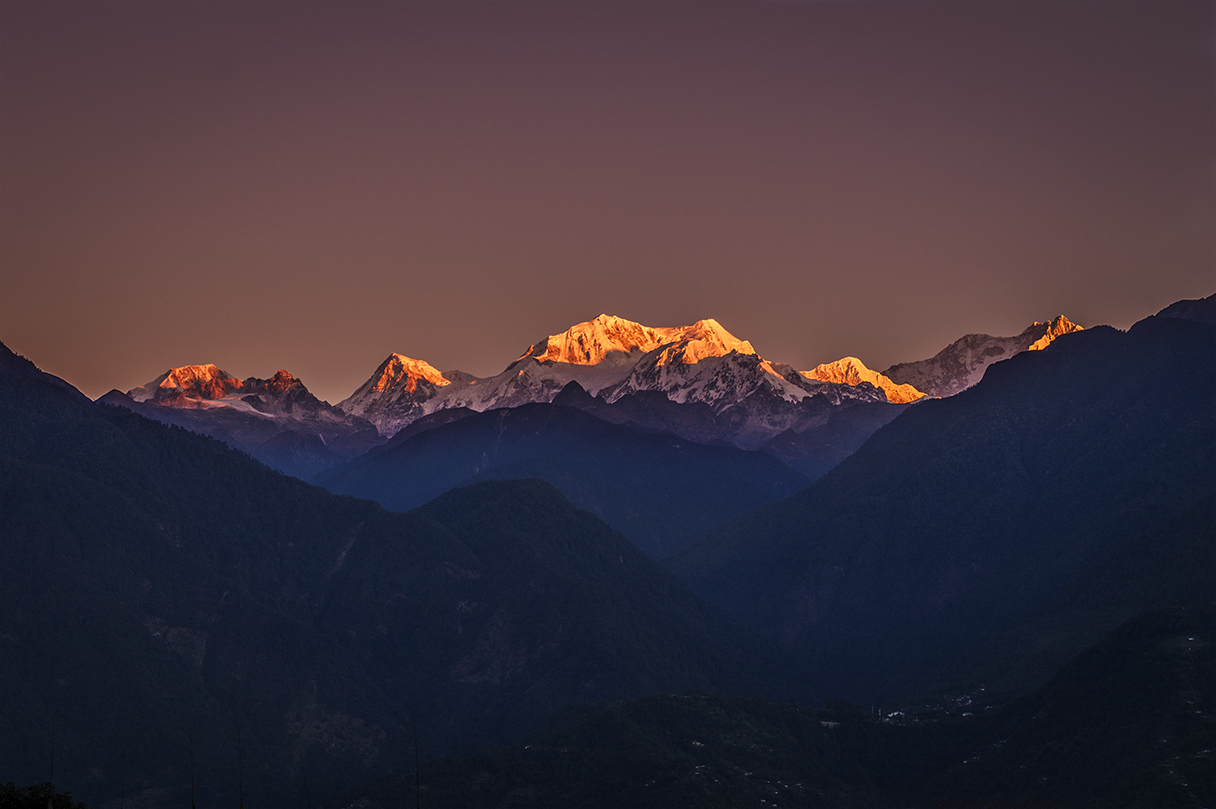
Leave Zuluk before dawn and in 30–40 minutes you are at Thambi View Point at about 3,400 m, looking down on the stacked hairpin loops you drove the evening before, with the Kangchenjunga range lighting up to the west on a clear morning.
A night in a caravan village
Zuluk's homestays are family houses in a village that once fed and sheltered mule caravans bound for Tibet. Dinner is rice, dal and whatever the family cooked that day, and the conversation is usually about the road, the snow and the army.
Snow on the Silk Route
From late December to February Zuluk often wakes up white. Snow turns the loops above the village into a bright zigzag, though it can also close the road for days. Keep spare days in winter and always check current status before you travel.
Birds of Pangolakha
The forests around Zuluk belong to the Pangolakha Wildlife Sanctuary. Early mornings bring blood pheasants and kalij pheasants on the roadside, and in spring rhododendrons bloom on the slopes above the village.
Where the 1888 campaign began
The British expedition of 1888 fought its first action at Jeluk, the old name for Zuluk, before moving up to the Tibetan fort at Lingtu and on to Gnathang. Few travellers who drive through know it.
The story of Zuluk
The stockade at Jeluk, March 1888
In the 1880s Tibetan troops crossed Jelep La and built a fort and a fortified gate at Lingtu, on the road from Darjeeling into Tibet, about 21 km inside Sikkim. Britain, which claimed influence over Sikkim, sent them an ultimatum to withdraw by 15 March 1888. When it expired, Brigadier-General Thomas Graham led a force up the old trade path. According to Wikipedia's account of the Sikkim expedition, Graham advanced to Sedongchen, about 11 km from Lingtu, on 19 March, and the next day attacked the Tibetan stockade at Jeluk, the old spelling of Zuluk. After that fight his men camped at Garnei within a mile of the Lingtu fort, which they took on 21 March. The campaign ended later that year, and the 1890 Convention of Calcutta drew the Sikkim–Tibet border. When you stand in Zuluk's lanes, you are on the ground where the first shots of that campaign were fired.
Source: Wikipedia: Sikkim expedition; Wikipedia: Convention of Calcutta
Little known
Things most visitors never hear
Wikipedia records that traders used Zuluk as an overnight base on the Kalimpong–Tibet route, which ran through Pedong, Aritar, Zuluk and Jelep La to the Chumbi valley until the 1959 crackdown in Tibet.
Source: Wikipedia: Dzuluk
Zuluk lies on the edge of the Pangolakha Wildlife Sanctuary, set up in 2002 over about 124 km², whose forests hold red panda, Himalayan black bear, blood pheasant and Himalayan monal.
Source: Wikipedia: Pangolakha Wildlife Sanctuary
The British force of 1888 knew Zuluk as Jeluk, and its first engagement of the Sikkim expedition was an attack on a Tibetan stockade here on 20 March 1888.
No shared jeeps run all the way to Zuluk for tourists. Take a shared jeep from Gangtok or Siliguri to Rongli (about ₹200–400 a seat), get your permit there and hire a local permit-registered vehicle for the last 30 km. In practice almost everyone comes by reserved car.
Private car
From Gangtok, about 90 km and 4–4.5 hours via Ranipool, Rorathang and Rongli, where permits are checked. Only locally registered vehicles with Silk Route permission can go beyond Rongli, so book a Sikkim-registered car and driver, usually an SUV, through a registered agent.
From Bagdogra / NJP
About 140–150 km, 5.5–7 hours via Rangpo, Rorathang and Rongli, or via Kalimpong, Pedong and Rhenock when NH10 is shut after monsoon slides. Most guests break the drive with a night at Aritar or Lingtam. Check current status before you travel.
The upper Silk Route beyond Rongli, including Lingtam, Padamchen, Zuluk, Thambi View Point, Nathang and Kupup, is a protected area open to Indian nationals only. The permit is processed at Rongli for named people, dates and a vehicle, usually through a registered agent, driver or homestay; carry original photo ID, copies and two passport photos. Foreign nationals, including OCI holders, are not allowed beyond Rongli, but Aritar, Mankhim, Rhenock, Rorathang, Rangpo and Pakyong town need only the general Sikkim entry permit. For Rolep, ask us. Check current status before you travel.
Zuluk has no hotels, only family homestays along the main road, most with three to six guest rooms and meals included. We book the better ones with indoor toilets and good bedding, and match families to houses with heaters where possible. If you want a gentler first night, sleep lower at Padamchen or Lingtam and drive up through Zuluk in the morning. Acclimatised travellers chasing sunrise can sleep higher at Lungthung, and the hardy go on to Nathang. For more comfort, Aritar's lakeside homestays and resort are three hours below.
Get your permit in Rongli early in the morning with photo ID and two passport photos, or let your agent do it a day ahead.
Carry cash: there is no ATM in Zuluk, and the nearest are in Rongli and Rhenock.
Pack thermals, a warm cap and gloves in every season; nights are cold even in May.
Do not fly a drone or photograph army installations; this is a sensitive border area.
Sleep one night lower first if you are coming straight from the plains, and drink plenty of water.
Month by month
When to visit Zuluk
JFMAMJJASOND
BestGoodAvoid or closed
Zuluk is at 2,800 m. Spend a night lower down first, climb slowly and drink water. Headache, nausea or breathlessness at rest mean go down. The altitude ladder.
Yes. Zuluk lies in a restricted area near the China border, and Indian nationals need a Silk Route permit, arranged via the authorities at Rongli, usually through a registered agent or your homestay. Carry original photo ID, photocopies and two passport photos. Apply a day ahead or early in the morning. Fees are about ₹200–500 per person through agents. Check current status before you travel.
Can foreigners visit Zuluk?
No. Foreign nationals are not allowed on the upper Silk Route, including Zuluk, Thambi View Point and Nathang, even with a Sikkim Restricted Area Permit. Foreign travellers can still enjoy the lower Silk Route villages such as Aritar, Mankhim and Rhenock, which need no extra permit. Rules change, so check current status before you travel.
How many hairpin bends are there on the Zuluk road?
Numbers quoted online vary, and we have not found an official count we trust, so we do not quote one. What matters is that the stretch above Zuluk climbs in many tight, stacked loops to Thambi View Point, and it is best seen from the top at sunrise. Your driver will know every bend.
What is the best time to visit Zuluk?
October to December for clear skies and mountain views, March to May for rhododendrons and milder nights, and January to February for snow if you can accept road closures. Avoid June to September, when monsoon slides often cut the road and clouds hide everything. Check current status before you travel.
How cold is Zuluk?
Days in spring and autumn are around 8–15 °C, with nights near or below freezing. In winter, nights fall well below zero and snow is common. Even in May, carry a fleece and a down or padded jacket, a warm cap, gloves and thermals. Homestays give heavy quilts, but few rooms have heaters.
Is Zuluk safe for children and seniors?
Usually yes, at about 2,800 m, if you climb gradually: sleep a night lower at Aritar, Lingtam or Padamchen first, keep children warm and hydrated, and watch for headache or unusual tiredness. We do not suggest taking infants higher than Zuluk. People with heart or lung conditions should check with a doctor first.
How many days do we need for Zuluk and the Silk Route?
From Gangtok, a 2-night, 3-day loop covers Zuluk, Thambi, Nathang and Kupup at a rush. We prefer 4 nights from Bagdogra or NJP: Aritar, Padamchen or Zuluk, a second night at Zuluk or Nathang, then out via Kupup and Tsomgo to Gangtok. That pace is kinder to the body and leaves room for weather.
Is there mobile network at Zuluk?
Patchy. BSNL and Jio have worked for many of our guests in the village, but expect gaps on the loops and at Nathang. Do not count on mobile data for maps or payments. Download offline maps, carry cash, and let family know you may be out of touch for a night.
What does a Silk Route trip to Zuluk cost?
On a budget, a 3-day Gangtok–Zuluk–Nathang–Gangtok trip by shared SUV and homestays can run from about ₹7,000–9,000 per person for two sharing. A private SUV adds up to around ₹16,000–20,000 per vehicle for three days, plus homestays at ₹1,200–1,800 per person a night with meals and permits. Prices are indicative.
Every cost shownRooms, car, permits and our fee, itemised
One person to callFrom Bagdogra or NJP until you are back
No payment to startA deposit only when you book
Get my price
Want Zuluk in your plan?
Tell us your dates, who is travelling and roughly what you want to spend. We reply within one working day with a day-by-day route and an itemised price.
No payment to start
Permits handled through registered partners
Every hotel, car and fee listed
Price my Sikkim trip
Tell us dates, people and budget. You get a day-by-day plan and an itemised price within one working day.