Two villages, one ridge
Rinchenpong and Kaluk sit on the same forested ridge in Soreng district, at about 1,700 m, roughly 40 km and two hours above Jorethang and about 125 km from NJP. Until the district was created in December 2021 they were part of West Sikkim, and many maps and booking sites still say so. Pelling is about 35–40 km away, 1.5–2 hours by road, which makes the pair an easy add-on to a West Sikkim trip.
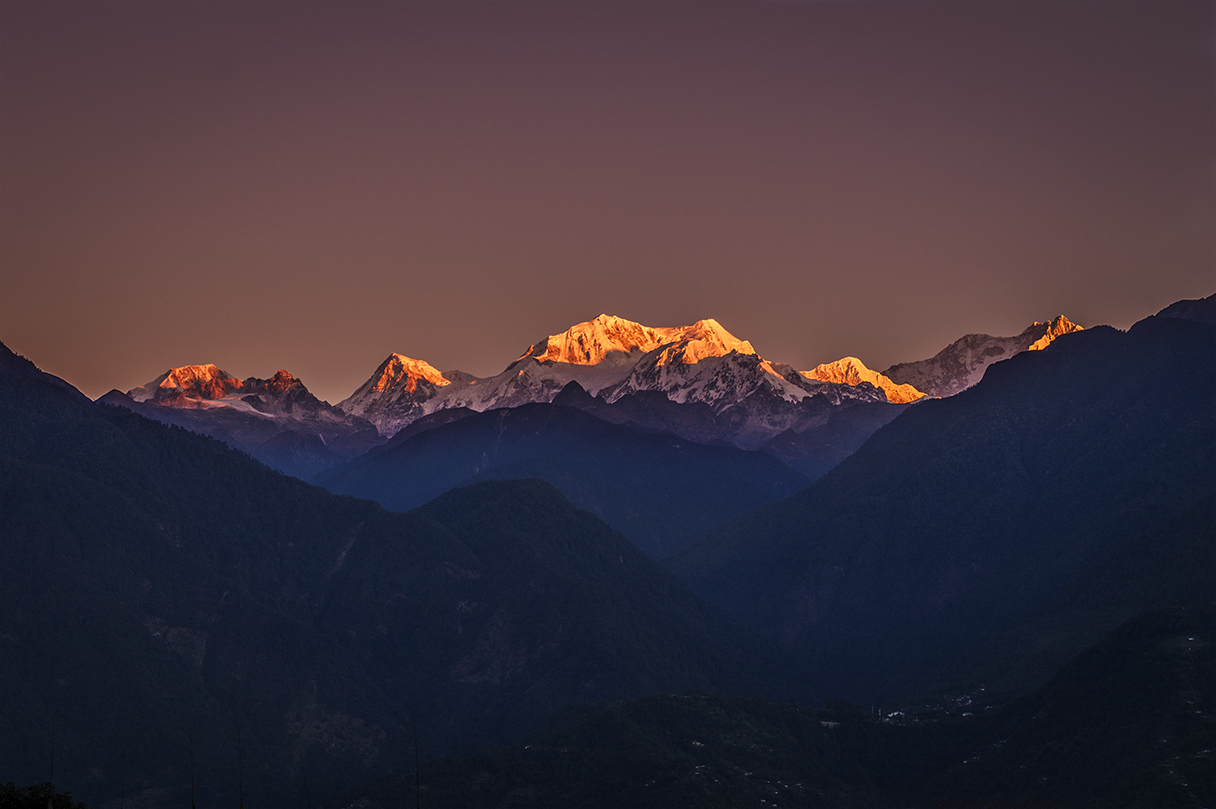
The reason to come is the view. From almost every terrace on the ridge the Kangchenjunga range stands across the valleys to the north, with Kabru, Rathong and Pandim in the line. Sunrise turns the snow pink, and from October to March the mountains are usually out for most of the morning. The rest is quiet: forest walks, two old monasteries, cardamom and orange orchards, and evenings with very little traffic.
Kaluk is the larger settlement, with a small bazaar, schools and several resorts. Rinchenpong is more scattered and climbs higher towards the monastery. You can walk between them in under an hour, so wherever you sleep, you can see both.
What to see in Rinchenpong
Rinchenpong Monastery stands above the village at a little over 1,700 m. Wikipedia, citing local records, dates it to 1730 and names its founder as Ngadakpa Lama, which would make it one of the older monasteries in Sikkim. Its best-known image is the Ati Buddha (Adi-Buddha, the primordial Buddha) shown in the yab-yum posture, blue and in union with a female figure, which is unusual for Sikkim. Ask the caretaker before entering the shrine room, and dress modestly.
Above the monastery a forest trail climbs to Resum Gompa, a small monastery on the crest of the ridge. The walk takes about 30–45 minutes each way through oak and rhododendron, and the view from the top looks both north to the snow peaks and south across the Rangeet valley.
Below the village is a small pond known as Bikh Pokhari, the Poison Lake. As told locally and repeated on Wikipedia, defenders poisoned its water during a fight with British troops in the 19th century to stop them advancing. The written sources for this are thin, so treat it as a village story rather than recorded history. There is also a patch of forest named Rabindra Smriti Van; as told locally, Rabindranath Tagore stayed in the area, though we have not found a written source to confirm it.
What to see in Kaluk
Kaluk is described on Wikipedia as one of the windiest places in Sikkim, and afternoons on the ridge can be brisk even in spring. Its main sights are the views. Megi Dara, a hilltop with a newer monastery and a reserve forest, is the favourite sunrise point, and the Durga Mandir is a local landmark. The roads between Kaluk and Rinchenpong pass through orange and cardamom orchards and small farms growing maize, ginger and vegetables.
From Kaluk you can also drive down to the Rangeet river for a change of scene, or out along the ridge towards Hee Bermiok and Dentam, which belong to Gyalshing district.
We turn this into a priced, day-by-day plan for your dates.
Where to stay at every budget
Both villages have homestays, small hotels and a handful of village resorts. The properties below are real and were operating at our last check; prices are indicative 2026 bands and change by season, so check current status before you travel. Avoid the October and December holiday weeks unless booked early.
| Stay | Where | Type | Indicative price |
|---|---|---|---|
| Family homestays | Rinchenpong and Kaluk | Homestay | ≈ ₹1,200–2,200 per person with meals |
| Zostel Rinchenpong | Rinchenpong | Hostel and private rooms | dorm beds from ≈ ₹700; rooms ≈ ₹2,000–3,500 |
| Hotel Mount View | Rinchenpong | Small hotel | ≈ ₹1,500–3,000 a room |
| Pine Village Retreat | Kaluk | Small resort | ≈ ₹3,500–6,000 a room |
| Ghonday Village Resort | Kaluk | Village resort | ≈ ₹3,000–5,500 a room |
| Mandarin Village Resort | Kaluk | Village resort | ≈ ₹3,000–5,000 a room |
| Yangsum Heritage Farm | Rinchenpong | Heritage farmstay | ≈ ₹6,000–9,500 a room with meals |
Rinchenpong or Kaluk: how to choose
Choose Rinchenpong if you want to walk. The monastery, Resum Gompa and Poison Lake are all on foot from the village, and the homestays here are close to the forest. Yangsum Heritage Farm, an old family farmhouse set in its own fields, is the ridge's most characterful place to stay and suits couples and anyone who likes food grown on the farm.
Choose Kaluk if you want a resort with a garden, a bigger room and a view from your bed. Kaluk is also better if you are travelling with older parents, as the resorts are on the road and need less climbing. Families on a budget do well in Kaluk homestays, which are cheaper than the resorts but share the same view.
Whichever village you pick, ask for a north-facing room: the mountain view is the point of being here, and a room facing the road or the hillside behind costs nearly the same. In April and May, when haze is common, a room with a balcony lets you catch the brief clear spells at dawn without getting dressed.
- Couples: Yangsum Heritage Farm or a Kaluk resort with a mountain-facing room
- Families: a Kaluk resort or a large homestay on the road
- Solo and backpackers: Zostel Rinchenpong or a family homestay
- Seniors: Kaluk, on the motor road, ground-floor room
- Birders and walkers: a Rinchenpong homestay near the monastery trail
A simple two-day plan
This is the plan we give most guests who arrive from NJP on day one and leave on day three. It needs no car once you are on the ridge, apart from the short hop to Megi Dara, which you can also walk if you start early.
On the first evening, after the 5–6 hour drive, do nothing more than find a terrace and watch the light go off the snow peaks. Dinner in the homestay is usually at about 7 pm, and nights are cool enough for a jacket in every month except June to August.
The full day starts before dawn. From October to March the sun reaches Kangchenjunga at around 5:30–6:15 am, and the first fifteen minutes are the best. After breakfast, walk up to Rinchenpong Monastery, then continue on the forest trail to Resum Gompa and back. In the afternoon, stroll down past Poison Lake and over to Kaluk through the orchards, have tea in the bazaar, and come back by shared jeep or on foot. On the last morning, take a second sunrise from Megi Dara before the long drive down.
- Day 1: arrive from NJP, evening on the terrace
- Day 2 morning: sunrise, monastery, Resum Gompa walk
- Day 2 afternoon: Poison Lake, orchards, Kaluk bazaar
- Day 3: Megi Dara sunrise, drive to NJP or on to Pelling
How long to stay and getting there
Two nights is the right length: one full day for the monastery, Resum Gompa and Kaluk, and two sunrises in case one is cloudy. Add a third night if you want a day trip to Hilley for the Barsey rhododendron walk (about 2–2.5 hours each way by car) or simply want to do nothing.
From NJP or Bagdogra the drive takes 5–6 hours via Melli and Jorethang. The first stretch uses NH10, which closes after landslides in the monsoon; drivers then come round via Darjeeling to Jorethang. Shared jeeps run from Siliguri to Jorethang and from Jorethang to Rinchenpong and Kaluk, with a few direct jeeps in the mornings.
| From Rinchenpong to | Road distance and time |
|---|---|
| Kaluk | ≈ 3 km · 10 min |
| Jorethang | ≈ 40 km · 2 h |
| Pelling | ≈ 35–40 km · 1.5–2 h |
| Hilley (Barsey walk) | ≈ 50 km · 2–2.5 h |
| NJP station | ≈ 125 km · 5–6 h |
| Gangtok | ≈ 125 km · 5–6 h |
Rules, fees, fares and road status change often. Check current status before you travel.