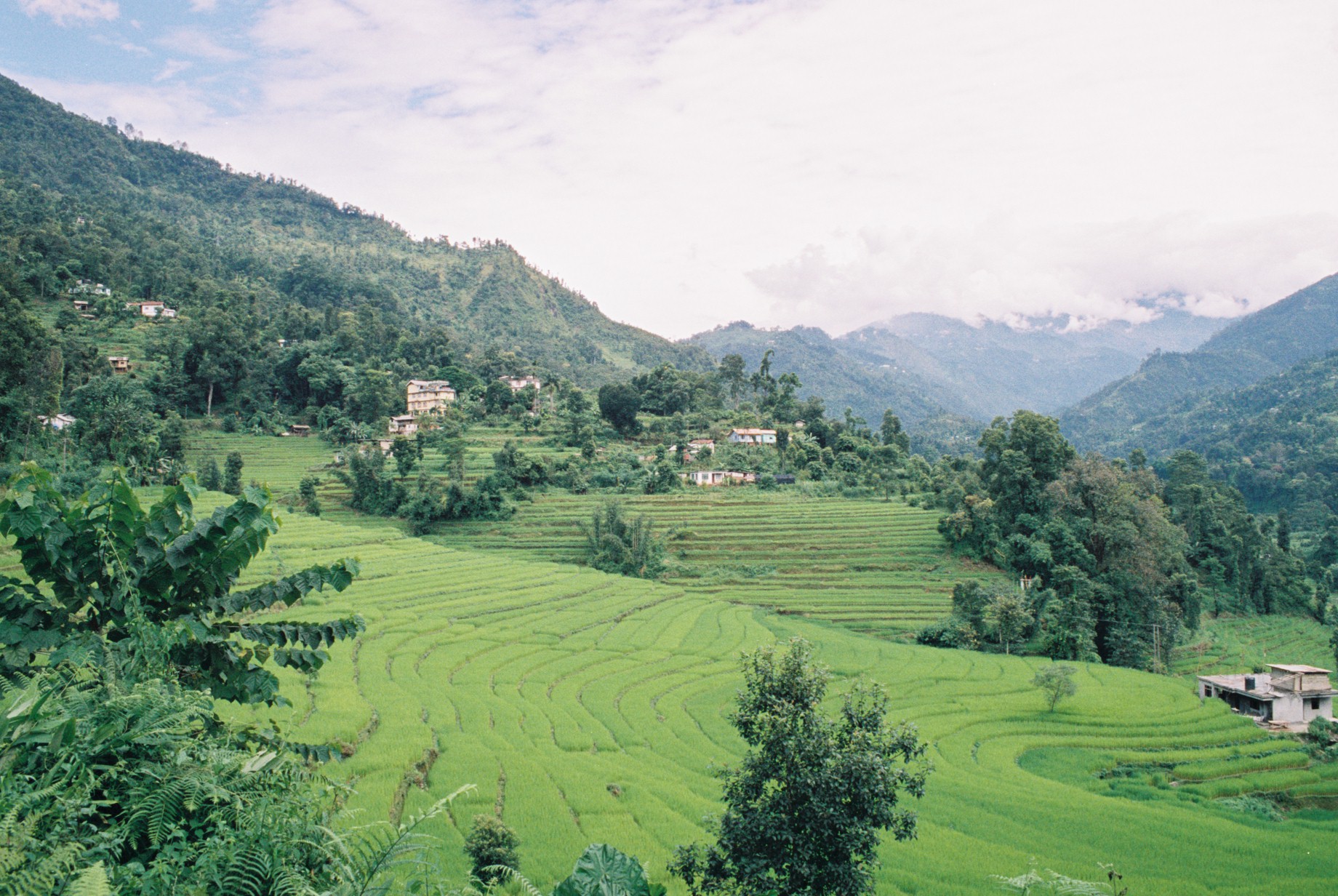
Tharpu is a farming village at about 880 m in Soreng district, about 13 km below Soreng town on the road to Daramdin. It holds Mangardzong, the site the district links with Sintu Pati Sen, a Mangar raja who, as told locally, defied the first Chogyal. Come for the story, the paddy terraces and a quiet half day.
Best months
October–March
Nights we suggest
0 (half day from Soreng or Daramdin)
From Gangtok
≈ 110 km · 4.5–5 h via Jorethang
Altitude
≈ 880 m
Known for
Mangardzong fort site, Mangar history, paddy terraces
Permit
Not needed for Indians; foreigners need Sikkim's RAP (e-FRRO)
About Tharpu and Mangardzong
What to know before you go
Tharpu lies low in Soreng district, at about 880 m, on the road from Jorethang and Nayabazar up to Daramdin and Sombaria. It is a farming village of paddy terraces, maize and orange trees, warm for most of the year, and about 13 km by road from Soreng town. Few travellers stop, but the village holds one of the most interesting historical stories in western Sikkim.
The Soreng district administration lists Mangardzong in Tharpu as a historic site. According to local people, it says, a Mangar ruler named Sintu Pati Sen governed this area around 1600 and refused to give up his title to Chogyal Phuntsog Namgyal, the first king of Sikkim. He won a first battle, the account continues, but was later attacked with Tibetan help and killed in a meadow still called Raja Tar. The state government has been building a memorial at the site.
The Mangar, or Magar, people are one of Sikkim's Nepali-speaking communities, and the district festival page describes Barahimizong, the Mangar day of ancestor worship whose name ends in zong, fort. Visiting Tharpu is a chance to hear a history from the point of view of a community that rarely features in Sikkim's royal chronicles. Combine it with Daramdin, 6 km up the road, and a walk through the paddy fields.
Highlights
What to see and do
Mangardzong, the Mangar raja's fort site
The site the district links with Sintu Pati Sen, a Mangar ruler who, as told locally, refused to surrender his title to the first Chogyal and was later killed after a Tibetan-backed attack. The government has been building a memorial here; check current status before you travel.
Raja Tar
The meadow where, according to the local account, the raja was chased through the jungle and killed. It keeps the name Raja Tar, the king's flat. Ask a local guide to point it out and tell the story; there is no signboard we know of.
Paddy terraces through the year
At about 880 m, Tharpu is warm enough for paddy. Fields are flooded and planted around June and July, turn green through the monsoon and gold before harvest in October and November. The district site lists paddy cultivation among things visitors can see here.
A Mangar perspective on Sikkim's history
Most Sikkim histories follow the Chogyals. Mangardzong tells the story of a ruler who resisted them, preserved by the Mangar community and recorded by the district. Hearing it on the spot, from local people, adds depth to visits to Rabdentse and other royal sites.
Walk on to Daramdin
Daramdin, about 6 km up the road, has its own Lepcha story of a tower of clay pots and village homestays. Walking or driving between the two in a morning gives you two of the district's oral histories in one half day.
Warm winter days
From November to February, when Rinchenpong and Okhrey are cold, Tharpu's days often reach 18–22 °C. That makes it a comfortable stop for families and older travellers, though it gets hot and humid from April and very wet from June.
The story of Tharpu and Mangardzong
Barahimizong and the meaning of zong
The Soreng district administration's festival page describes Barahimizong, a festival of the Mangar (Magar) community observed on the fifth day of Mangar Purnima. In the Mangar language, it explains, barahi means god, minaat or mi means worship or prayer, and zong means fort, and the festival is named for the day the Mangar worship their forefathers, their kul devta. The same word, zong, ends the name of Mangardzong in Tharpu, which the district describes as the seat of Sintu Pati Sen, a Mangar raja who, according to local people, ruled here around 1600 and refused to surrender his title to Chogyal Phuntsog Namgyal. Wikipedia's Magars article notes that the name is also spelled Mangar and Mongar, and that Magars are native to Nepal and Northeast India. We have not found a written source that ties its celebration specifically to Tharpu, so ask locally whether a gathering is held at the Mangardzong site.
Source: Soreng district administration, soreng.nic.in (Festivals; Mangardzong); Wikipedia: Magars
Little known
Things most visitors never hear
The district dates Sintu Pati Sen's rule to around 1600, according to local people, while Wikipedia gives 1642 for Phuntsog Namgyal's consecration as first Chogyal, so the dates in the oral account are approximate.
The meadow where, according to the local account, the Mangar raja was finally killed is still called Raja Tar, tar being the Nepali word for a flat stretch of land.
Source: soreng.nic.in (Mangardzong); as told locally
The district festival page explains Barahimizong word by word: barahi means god, mi or minaat means worship, and zong means fort, the same zong as in Mangardzong.
Jeeps between Jorethang and Daramdin or Sombaria pass through Tharpu, about an hour from Jorethang for roughly ₹70–120 a seat. Ask the driver to drop you at Tharpu. From Siliguri, take a shared jeep to Jorethang (3.5–4 hours, ₹250–350) and change. Returning, flag down a jeep on the main road.
Private car
Tharpu is about 23 km from Jorethang via the Akar bridge and Nayabazar, about 13 km from Soreng town and 6 km below Daramdin. A small car for a half-day visit from Soreng or Daramdin costs about ₹1,500–2,000. From Gangtok, allow 4.5–5 hours for about 110 km via Melli and Jorethang.
From Bagdogra / NJP
Tharpu is roughly 110–120 km from Bagdogra and NJP, 4–4.5 hours by car via Sevoke, Melli and Jorethang, about ₹4,500–6,000 for a small car. NH10 along the Teesta closes after monsoon slides, when drivers go via Kalimpong or Darjeeling. Check current status before you travel.
Permits in Soreng
Indian travellers need no special permit anywhere in Soreng district. You pay Sikkim's ₹50 tourist fee, collected by your hotel or homestay and valid 30 days, and an entry ticket at the Hilley checkpost for the Barsey Rhododendron Sanctuary, about ₹50 for Indians. Foreign nationals need Sikkim's Restricted Area Permit, which since 12 January 2026 is applied for online on the e-FRRO portal after arriving in India, with approval in 24–48 hours. Foreigners pay a higher Barsey entry fee. Check current status before you travel.
Tharpu has no tourist accommodation that we would book. The district site lists The Orchid Hotel and Hotel Namgjong in Soreng town and Mustang Homestay for visitors to Mangardzong; The Orchid Hotel at Pragati Chowk costs about ₹1,500–3,000 a room. Daramdin, 6 km up the road, has village homestays with Limbu and Lepcha families at about ₹1,200–2,000 per person with meals. Most travellers see Tharpu as a half day from either base.
Tharpu is a village in Soreng district, which was part of West Sikkim until December 2021. It lies at about 880 m on the road from Jorethang to Daramdin and Sombaria, about 23 km from Jorethang, 13 km below Soreng town and 6 km below Daramdin.
What is Mangardzong?
A historic site in Tharpu that the Soreng district administration links with Sintu Pati Sen, a Mangar raja who, according to local people, ruled around 1600, refused to surrender his title to the first Chogyal and was later killed at Raja Tar. The state government has been building a memorial there.
Is Tharpu worth visiting?
Yes, as a half day, for travellers interested in history and village life. The Mangardzong story offers a rare non-royal view of Sikkim's past, and the paddy terraces are lovely at harvest. There are no hotels or big viewpoints, so sleep in Soreng or Daramdin.
How do I get to Tharpu?
By car, about 23 km from Jorethang via Nayabazar or 13 km from Soreng town. Shared jeeps between Jorethang and Daramdin or Sombaria pass through; ask to be dropped at Tharpu. From Siliguri or NJP, allow 4–4.5 hours by car. NH10 closes after monsoon slides; check current status before you travel.
Who are the Mangar people?
The Mangar, also spelled Magar or Mongar, are a Tibeto-Burman community native to Nepal and Northeast India, according to Wikipedia, and one of Sikkim's Nepali-speaking communities. The Soreng district site describes their festival Barahimizong, a day of ancestor worship. Mangardzong in Tharpu is tied to their history in Sikkim.
Do I need a permit to visit Tharpu?
Indian nationals do not need a special permit. Foreign nationals need Sikkim's Restricted Area Permit, applied for online on the e-FRRO portal after arriving in India since January 2026. Sikkim's ₹50 tourist fee is collected by accommodation. Check current status before you travel.
Is there an entry fee at Mangardzong?
We are not aware of one, but the site has been under development as a memorial, and fees or opening hours may be introduced. Check on site or ask us before you travel. A local guide costs about ₹500–1,000 and is the best way to hear the story.
What is the weather like in Tharpu?
Warm. At about 880 m, winter days often reach 18–22 °C, with cool nights. From April it becomes hot and humid, and June to September bring heavy rain. October to March is the best time to visit, with clear skies and harvest activity in October and November.
Where should I stay when visiting Tharpu?
In Soreng town, about 13 km away, where The Orchid Hotel and other budget hotels cost about ₹1,500–3,000 a room, or in Daramdin, 6 km up the road, in village homestays at about ₹1,200–2,000 per person with meals. Tharpu itself has no tourist accommodation we would book.
Every cost shownRooms, car, permits and our fee, itemised
One person to callFrom Bagdogra or NJP until you are back
No payment to startA deposit only when you book
Get my price
Want Tharpu and Mangardzong in your plan?
Tell us your dates, who is travelling and roughly what you want to spend. We reply within one working day with a day-by-day route and an itemised price.
No payment to start
Permits handled through registered partners
Every hotel, car and fee listed
Price my Sikkim trip
Tell us dates, people and budget. You get a day-by-day plan and an itemised price within one working day.