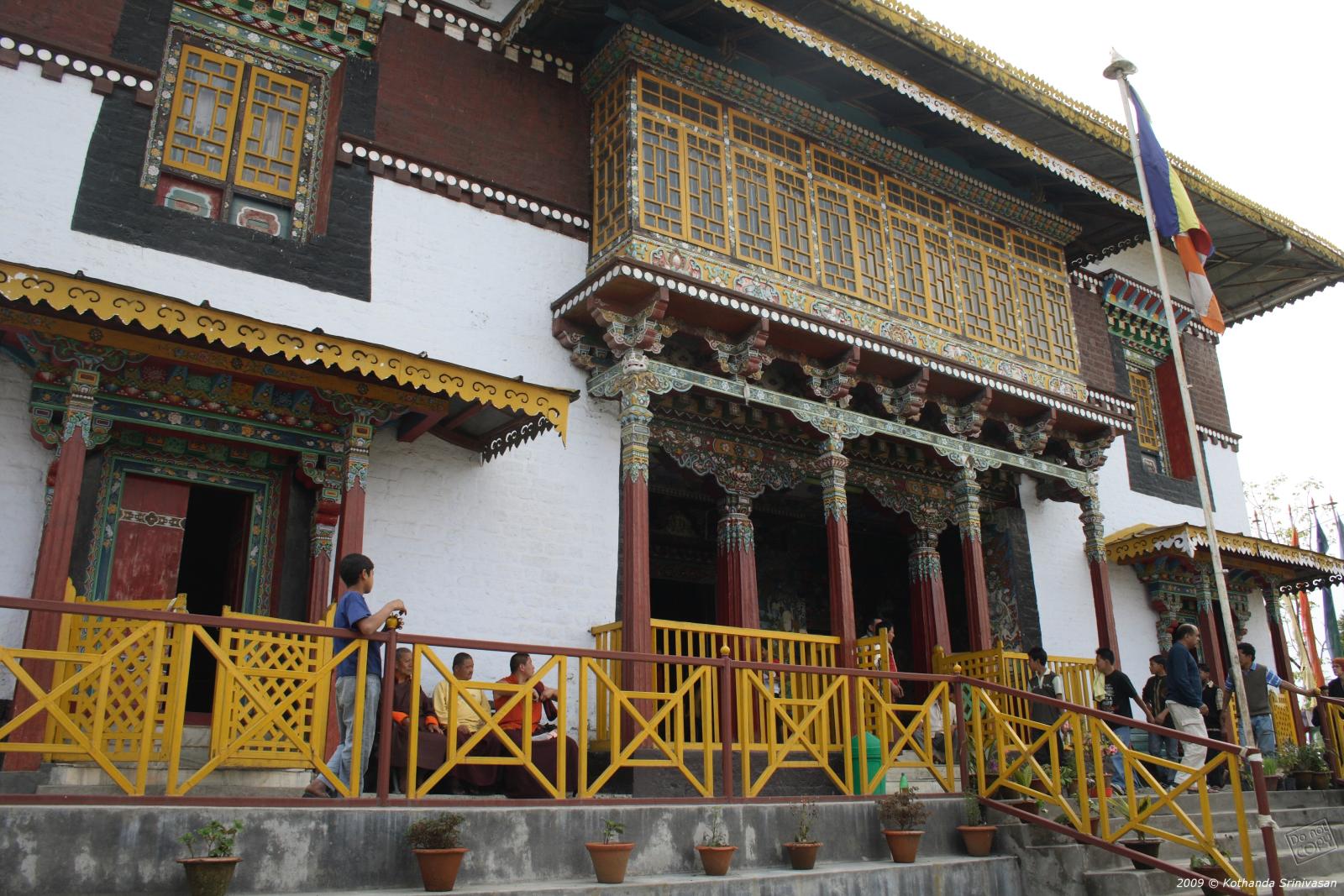
Why Sikkim's monasteries look the way they do
Buddhism came to Sikkim in its Tibetan form, and the state's monasteries follow Tibetan schools. The oldest and, in Sikkim, the most widespread is the Nyingma, the 'old school', which traces itself to Padmasambhava, known in Sikkim as Guru Rinpoche. According to Sikkim's own histories, three Nyingma lamas consecrated Phuntsog Namgyal as the first Chogyal at Yuksom in 1642, and the kingdom's royal monasteries, such as Pemayangtse in West Sikkim, are Nyingma.
The Kagyu school arrived with its own lineages, and in the 20th century Sikkim became the exile home of its largest branch, the Karma Kagyu, when the 16th Karmapa came here from Tibet in 1959 and built Rumtek. That is why the two biggest names around Gangtok, Rumtek and Enchey, belong to different schools, and why their festivals, murals and protective deities differ.
You do not need to know the theology to enjoy a visit, but a few words help. A gompa is a monastery; a lhakhang is a temple hall; a chorten is a stupa, a shrine that holds relics; Chaam is a masked ritual dance; a mani lhakor is a prayer wheel. The Namgyal Institute of Tibetology, founded in 1958, documents about 60 monasteries in Sikkim, and its museum is the best place to see old thangkas and manuscripts.
| Monastery | School | Founded or built | From MG Marg |
|---|---|---|---|
| Enchey Monastery | Nyingma | 1909, on an 1840s site | ≈ 3 km · 15 min |
| Tsuklakhang | Nyingma, royal chapel | Royal chapel of the palace | ≈ 1 km · 5 min |
| Do Drul Chorten | Nyingma | 1945–46 | ≈ 2.5 km · 10 min |
| Rumtek (Dharma Chakra Centre) | Karma Kagyu | Mid-18th century; new seat 1966 | ≈ 24 km · 1 h |
| Lingdum (Ranka) | Kagyu (Zurmang) | Late 1990s | ≈ 20 km · 50 min |
Rumtek: the Karmapa's seat in exile
Rumtek is about 24 km from Gangtok, across the valley at about 1,550 m. The first monastery here was built in the mid-18th century under the direction of Changchub Dorje, the 12th Karmapa. When the 16th Karmapa, Rangjung Rigpe Dorje, left Tibet in 1959, the Chogyal offered him land, and over four years a new monastery was built beside the old one; it was inaugurated at Losar in 1966 as the Dharma Chakra Centre.
Inside, look for the main prayer hall with its murals and statues, the Golden Stupa that holds the relics of the 16th Karmapa, and the Karma Shri Nalanda Institute for Higher Buddhist Studies behind it. Rumtek has been at the centre of a long dispute over the recognition of the 17th Karmapa, and Indian security forces have guarded it since sectarian clashes in the early 2000s. Expect an ID check at the gate. Old Rumtek, the original monastery, is a short drive down the hill and much quieter.
Enchey: the Chaam monastery above town
Enchey Monastery sits on a forested spur about 3 km north-east of the market. A small gompa was first established here in the 1840s on a site associated with Lama Druptob Karpo, a tantric master remembered in tradition for his power of flight, and the present building dates from 1909. It belongs to the Nyingma school.
Enchey is best known for its Chaam, the masked dance held on the 18th and 19th days of the 12th month of the Tibetan calendar, usually in January or February. Monks in brocade robes and painted masks dance the defeat of evil spirits in the courtyard, and the town comes up the hill to watch. A larger Singhe Chaam, the snow-lion dance, is performed every few years. On ordinary days Enchey is calm, with monks at prayer in the morning and prayer flags in the pines.
We turn this into a priced, day-by-day plan for your dates.
Tsuklakhang and the Do Drul Chorten
The Tsuklakhang is the royal chapel inside the old palace compound of the Chogyals, close to the centre. It was where royal ceremonies, including coronations and weddings, took place, and it holds a large collection of scriptures. It is not always open to visitors, but during Losoong in December and Pang Lhabsol in August or September its courtyard hosts Chaam dances, including the warrior dance in honour of Kanchenjunga.
The Do Drul Chorten, a short drive downhill, is a large white stupa built in 1945–46 by Trulshik Rinpoche, a Nyingma master from Tibet who was invited by the young Chogyal. Around it run 108 large prayer wheels on two terraces, each inscribed with the mantra Om mani padme hum. Walk around it clockwise, turning the wheels with your right hand, as local people do in the morning. The Namgyal Institute of Tibetology is a few minutes' walk away.
Lingdum and Ranka: the newest and quietest
Lingdum, also called the Pal Zurmang Kagyud Monastery, stands in a clearing in the forest near Ranka, about 20 km from Gangtok. It belongs to the Zurmang branch of the Kagyu school and was completed around the end of the 1990s, so its murals and woodwork are bright and new. It is spacious and calm, and the young monks' afternoon prayers are worth timing your visit for.
Lingdum pairs well with Rumtek on the same day, since both lie on the eastern side of the valley. Allow half a day for the two, with lunch on the way. The road is narrow in places and slow in the monsoon.
Visit in the late afternoon and you may hear the long horns and drums of the evening prayers echo across the clearing, with very few other visitors around.
How to visit respectfully
Monasteries are working religious houses, not museums, and the monks and lay visitors you meet are there to pray. A few habits make a visit easier for everyone. Most monasteries charge a small entry fee or none; a small offering in the donation box is welcome but never required.
- Walk clockwise around chortens, prayer wheels and temple halls
- Remove shoes before entering prayer halls; leave them by the door
- Dress modestly: covered shoulders and knees
- Ask before photographing monks, and never use flash inside halls
- Do not touch statues, murals or ritual objects
- Do not sit with your feet pointing towards the altar
- Keep your voice low during prayers, and do not walk between monks at prayer
- At Chaam festivals, stay behind the rope and do not step into the dance area
A one-day monastery route
Start at Enchey at about 8 am, when morning prayers are on. Drive down to the Do Drul Chorten and the Namgyal Institute of Tibetology by 10, then cross the valley to Lingdum for midday and Rumtek in the afternoon, back in Gangtok by 5 pm. A reserved small car for this route costs about ₹3,500–4,500 for the day in 2026; check current rates before you travel. If you can be in Gangtok for Losoong, Pang Lhabsol or the Enchey Chaam, plan the trip around it: the dates follow the Tibetan lunar calendar and change every year.
If you have only two hours, choose Enchey and the Do Drul Chorten, which are close to town and show both a working Nyingma monastery and the prayer-wheel ritual that frames daily life here. If you have a whole morning, cross the valley for Rumtek. And if you are travelling on to Pelling, save your energy for Pemayangtse, the great royal monastery of the west, which completes the story that begins in Gangtok.
Rules, fees, fares and road status change often. Check current status before you travel.