Craft · Dzongu
The cardamom harvest in Dzongu
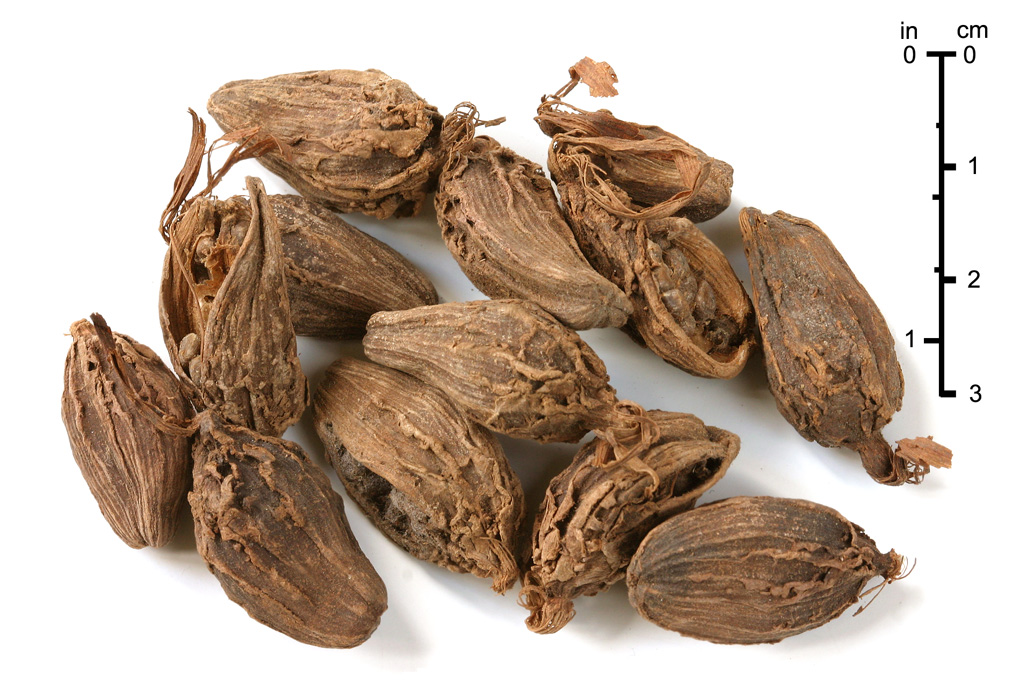
In autumn, follow a Dzongu family to their cardamom grove under the alder trees and watch the pods being cut, sorted and dried over a wood-fired kiln. The smell of spice smoke fills the valley in these weeks.
Photo: Brian Arthur · CC BY-SA 3.0, Wikimedia Commons
Large cardamom has long been a mainstay of the Dzongu economy. The plants grow in the shade of trees on the steep slopes above the villages, and in autumn families cut the clusters of red pods close to the ground, carry them home in baskets, and separate the pods by hand. It is hard, careful work on steep land.
The pods are then dried in a bhatti, a kiln where they sit on a rack above a slow wood fire for a day or more. The smoke gives Sikkim's large cardamom its typical flavour. Dried pods are sacked and sold to traders in Mangan and further down the highway. Ask your hosts how disease and swinging prices have affected their groves; many families now rely on homestays as a second income.
Harvest visits depend on the family's timetable, so this is arranged through your homestay, not booked as a tour. Keep out of the way of workers on narrow paths, and do not walk into groves without your host.
Good for
Questions travellers ask
Before you book
When can I see cardamom drying in Dzongu?
Usually from about September to November, when families harvest and dry their large cardamom. Exact weeks depend on altitude and the year. Tell us your dates and we will ask our host families whether they expect to be harvesting. Outside the season you can still visit the groves.
Can I buy cardamom from Dzongu farmers?
If a family has dried cardamom and is happy to sell a small amount, you can buy it directly. Prices follow the market. Do not push if they say no: most of the crop is committed to traders. Carry it sealed, since the smoky smell is strong.
Why is large cardamom important in Dzongu?
Large cardamom has long been the main cash crop of Dzongu and much of North Sikkim, suited to the shaded, humid slopes. It pays for school fees and house repairs in many families. Disease and price swings have hurt growers, which is part of why homestay tourism matters here.
Also in Dzongu
More hours worth planning
 Food
Cooking with a Lepcha family in Dzongu
Join your host family in the kitchen for a Lepcha meal from their own fields: rice, greens, nettle or fern, local meat …
 Village life
A village-to-village walk in Dzongu
Walk old footpaths between Dzongu villages with a local guide, past cardamom groves, paddy terraces, prayer flags and streams. Moderate effort, big …
Nature
Streams, falls and hot springs of Dzongu
Spend a day with your host visiting the waterfalls, river bends and, where open, the hot springs of Dzongu, places that the …
Price your own route
Tell us dates, people and budget. We send a day-by-day plan with every cost shown. StartNot sure where to start?
We match districts to your month, your budget and the people travelling with you. StartAsk the Gangtok desk
An itemised quote within one working day. No payment to start. StartPackages
Trips that stop in Dzongu
Budget
Top1,500M
Dzongu Lepcha village escape
Dzongu
 Value
Top5,183M
Dzongu homestay and North Sikkim
Gangtok · Dzongu · Lachen · Lachung · Gangtok
Price your own route
Tell us dates, people and budget. We send a day-by-day plan with every cost shown. StartNot sure where to start?
We match districts to your month, your budget and the people travelling with you. StartAsk the Gangtok desk
An itemised quote within one working day. No payment to start. StartGet my price
Tell us your dates and your budget
Who is travelling, when, and roughly what you want to spend. The Gangtok desk replies within one working day with a day-by-day plan and an itemised price.
- No payment to start
- Permits handled through registered partners
- Every hotel, car and fee listed